
In this article, we'll dive into all the pros and cons of these faucet filter systems to help you decide if they're the right fit for your needs.
You twist the faucet handle, fill a glass, and take a sip — only to wince at that faint pool-chemical taste or the gritty feel on your tongue. You're not alone. A faucet filter can turn that moment around, and you don't need a plumbing license or a weekend to make it happen. In this article, we'll walk through what these little devices actually deliver, where they stumble, and how to keep yours running clean so you can drink without second-guessing.
Quick verdict
If you want better-tasting water at a single tap without tearing into your plumbing, a faucet filter is the simplest, most affordable move you can make today. It won't solve every water-quality problem under the sun, but for chlorine, sediment, and that faint off-flavor that's been bugging you, it's a quick win that pays for itself fast.
Pros of Faucet Filter Systems:
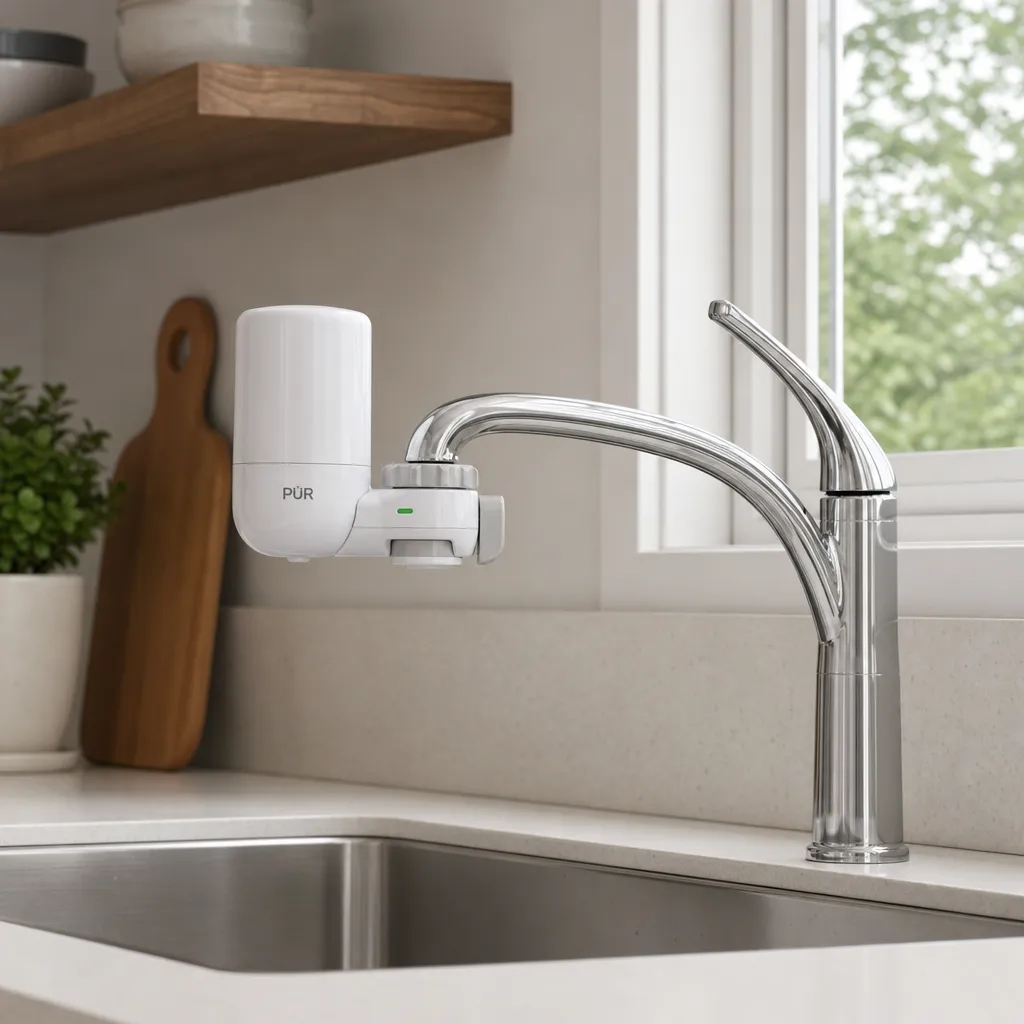
The moment you run water through a faucet filter, you'll notice the difference. Homeowners commonly report better-tasting water and fewer visible particles after installation — the chlorine edge softens, and the glass looks clearer instead of cloudy. That's the filter catching sediment and knocking down the chemicals that make tap water taste like a swimming pool.
Installation is refreshingly simple. Most models use a push-fit mechanism for 1/4″ tubing that requires no special tools — you mark the spot, drill a pilot hole if the kit calls for it, and connect the supply line 1. You'll spend more time reading the instructions than turning a wrench. If you can swap a showerhead, you can handle this.
Because you're treating only the water you drink and cook with, the cost stays low. Faucet filters are an affordable entry point compared to whole-house systems, and replacement cartridges ring up cheaper than bottled water over time. You get immediate improvement at the tap you use most, without paying to filter every shower and toilet flush in the house.
And you're not stuck with a one-size-fits-all cartridge. Many systems let you choose a filter that targets your specific gripe — odd odors, metallic tang, or a particular contaminant your water report flagged. That flexibility means you're not overpaying for filtration you don't need.
Cons of Faucet Filter Systems:
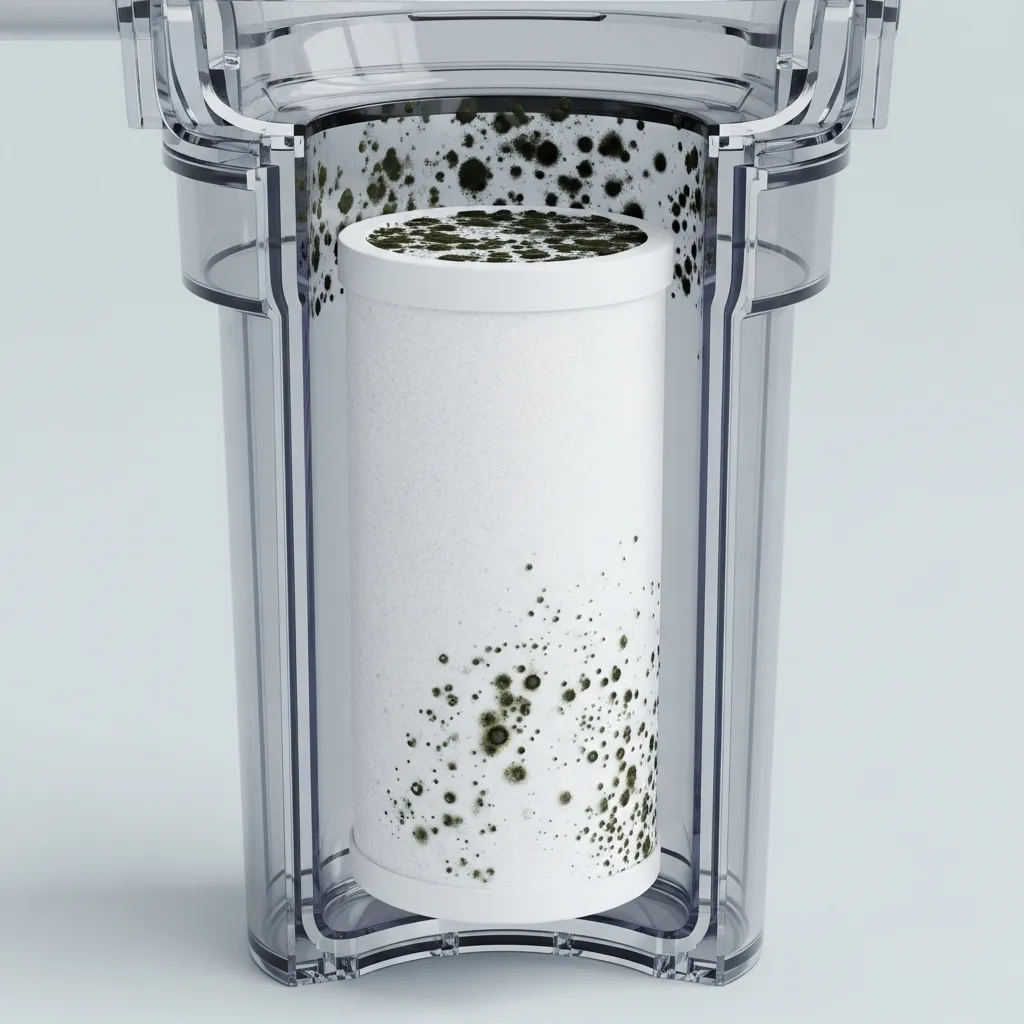
Faucet filters live in a damp, dark spot, and that's exactly where mold likes to throw a party. One homeowner found themselves scrubbing their filter housing constantly after mold kept creeping back. Experienced plumbers point out that manganese in the water can feed bacteria growth that looks and smells like mold, so the problem isn't always just surface grime 2.
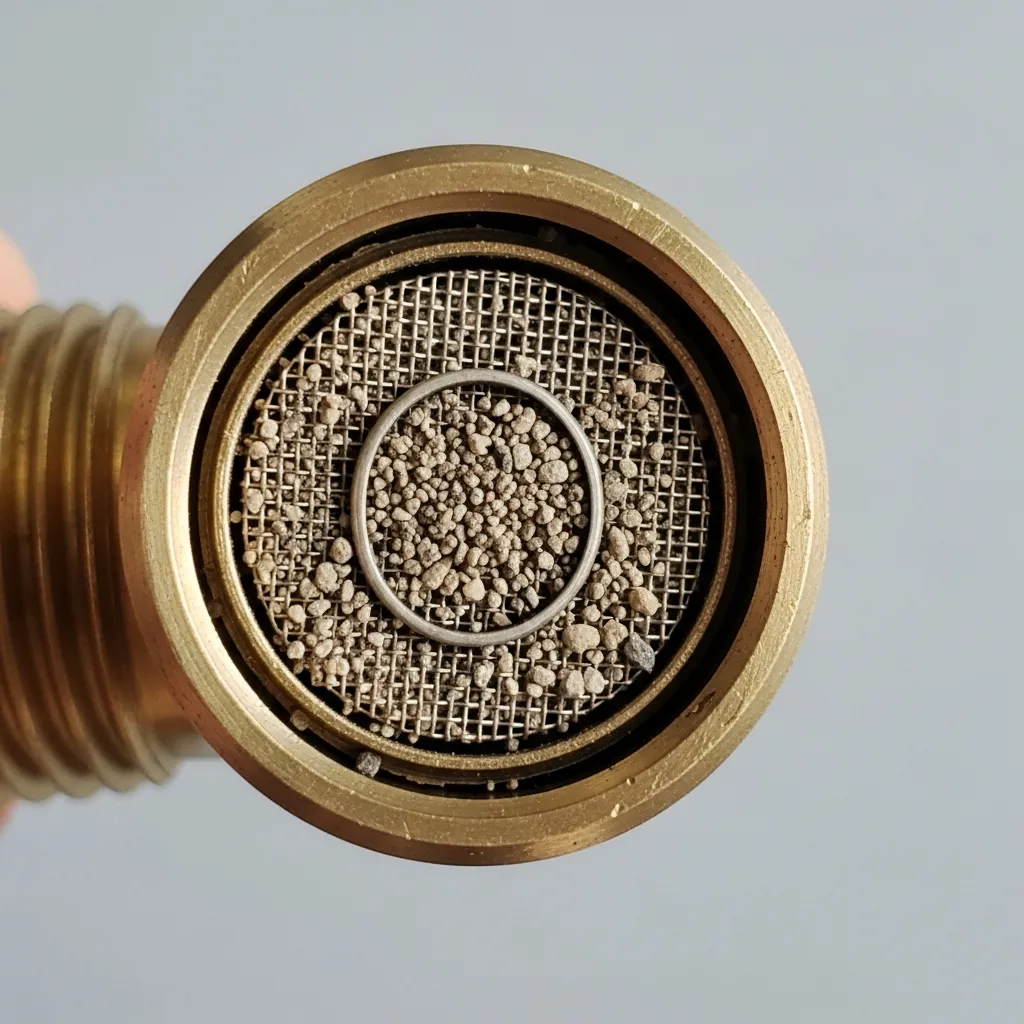
Clogs are another headache. Sediment from hard water, disintegrating rubber washers, or leftover soldering debris can pack themselves into the aerator or cartridge until your water pressure drops to a sad trickle 3. You'll know it's happening when the stream turns uneven or the flow feels weaker than it did last week.
That reduced flow can also come from the filter itself. A homeowner with a brand-new Delta faucet couldn't figure out why the pressure was so lousy until a plumber found a broken plastic piece in the spray head actuator 4. Even a perfectly intact filter adds resistance, so if you're the type who wants a firehose blast to fill a pasta pot, the gentler stream might test your patience.
Sometimes the stuff you find in the filter is downright weird. Small stones or pebbles can collect in the screen, and they're often a clue pointing upstream. A plumber suggested testing them with vinegar — if they fizz, it's lime scale. If they don't, you might be dealing with a failing dip tube in a water heater from the mid-1990s, shedding plastic bits into your hot water line 5.
Leaks are the final frustration. If you don't tighten the connections just right or you skip the Teflon tape where the threads need it, you'll get a slow drip that can warp a cabinet floor. Installation guides recommend checking every connection after you turn the water back on and reapplying tape if you spot any moisture 6.
Side-by-side comparison
| Factor | Faucet Filter System | Whole-House System | Pitcher Filter |
|---|---|---|---|
| Upfront cost | $20–$60 | $500–$2,500+ | $15–$50 |
| Install difficulty | No tools required | Professional install recommended | None |
| Filter life | 2–4 months | 6–12 months | 1–2 months |
| Flow rate impact | Noticeable reduction | Minimal | N/A (batch fill) |
| Contaminant range | Chlorine, sediment, some VOCs | Broad (sediment, chlorine, heavy metals, bacteria with add-ons) | Chlorine, basic taste/odor |
| Maintenance | Cartridge swap + aerator cleaning | Sediment flush + media replacement | Cartridge swap |
Key differences explained
The biggest gap between a faucet filter and a whole-house system is scope. A faucet filter treats one tap — the one you drink from. A whole-house system treats every drop that enters your home, so your showers, laundry, and toilets all get the same filtration. That sounds great until you see the price tag and realize you're filtering water you'll never swallow.
Flow rate is where faucet filters show their size. Because the water has to push through a compact cartridge right at the spout, you'll feel the resistance. Whole-house systems use larger media beds that barely affect pressure, and pitchers sidestep the issue entirely by filtering in batches. If you fill large pots daily, the slower stream from a faucet filter might grate on you after a while.
Maintenance rhythm differs too. A faucet filter cartridge needs swapping every few months, and you'll also need to unscrew the aerator and scrub the housing to stay ahead of mold and sediment buildup. Whole-house systems go longer between changes but require more muscle when the time comes. Pitchers are the easiest to maintain — just pop in a new cartridge — but they can't match the convenience of filtered water straight from the tap.
When to choose a faucet filter
Pick a faucet filter when you're renting or you don't want to cut into plumbing. It's the only option that leaves your under-sink cabinet untouched and moves with you when the lease ends. Choose it when your main complaint is taste and odor — chlorine, that faint earthy note, or a slight metallic edge. It's also the right call when you want filtered water on demand without remembering to fill a pitcher. If your household is small and you're not running the tap nonstop, the limited cartridge capacity won't hold you back.
When to choose a whole-house or under-sink system
Go bigger when your water test shows contaminants a faucet filter can't touch — think nitrates, arsenic, or bacteria. Choose a whole-house system if you're dealing with sediment so heavy it's clogging every aerator and showerhead in the house, or if you want soft water benefits at every fixture. An under-sink system with a dedicated faucet makes sense when you need high flow and multi-stage filtration but still want to keep costs below a whole-house install. If anyone in your home has a compromised immune system, the broader protection of a more robust system is worth the investment.
Cost considerations
A decent faucet filter runs $20 to $60 upfront, and replacement cartridges cost $10 to $25 every two to four months. Over a year, you're looking at $50 to $150 total — less than what many households spend on bottled water in a month. The hidden cost is your time: you'll spend ten minutes every few months swapping the cartridge and cleaning the housing. Skip that cleaning and you might buy a new unit sooner than expected if mold or clogs take hold. Compared to a whole-house system that starts around $500 and needs professional installation, the faucet filter is the clear budget winner for renters and anyone testing the filtered-water waters.
Frequently Asked Questions
How often should I really change the cartridge? Follow the manufacturer's recommendation — usually every 2 to 4 months. If your water is heavy with sediment or you notice the flow dropping sooner, swap it earlier. A clogged cartridge strains your plumbing and stops filtering effectively.
Can I install a faucet filter on any faucet? Most models fit standard kitchen faucets with removable aerators, but pull-down spray heads and designer fixtures can be incompatible. Check the threading and the space around your spout before you buy.
Why does my filter smell musty after a few weeks? That's likely mold or bacteria feeding on manganese in your water. Take the housing apart weekly, scrub it with a mild bleach solution, and let it dry completely before reassembling 2.
What are those tiny pebbles in my filter screen? They could be lime scale from hard water or plastic bits from a deteriorating dip tube in an older water heater. Drop them in vinegar — if they fizz, it's scale. If they don't, have a plumber check your water heater 5.
Why is my water pressure so low after installing a new filter? Check the aerator and cartridge for sediment or debris first. If those are clean, the filter itself might be defective or the spray head actuator could be broken — a known issue some homeowners have hit with new faucets 4.
Conclusion
Faucet filters earn their spot on the tap — they make water taste better, they're gentle on your wallet, and you can install one without a single trip to the hardware store. But they're not set-and-forget devices. Regular maintenance, including cleaning the aerator and replacing filters on schedule, is essential to avoid clogging and mold 2. If you're willing to spend a few minutes every month on that upkeep, you'll get clean, crisp water right when you want it. Weigh the capacity limits and the flow-rate tradeoffs against your household's habits, and you'll know whether this little helper is the right fit for your kitchen.