How to Install a Water Main: Your Stress-Free DIY Guide to Reliable Home Water Supply
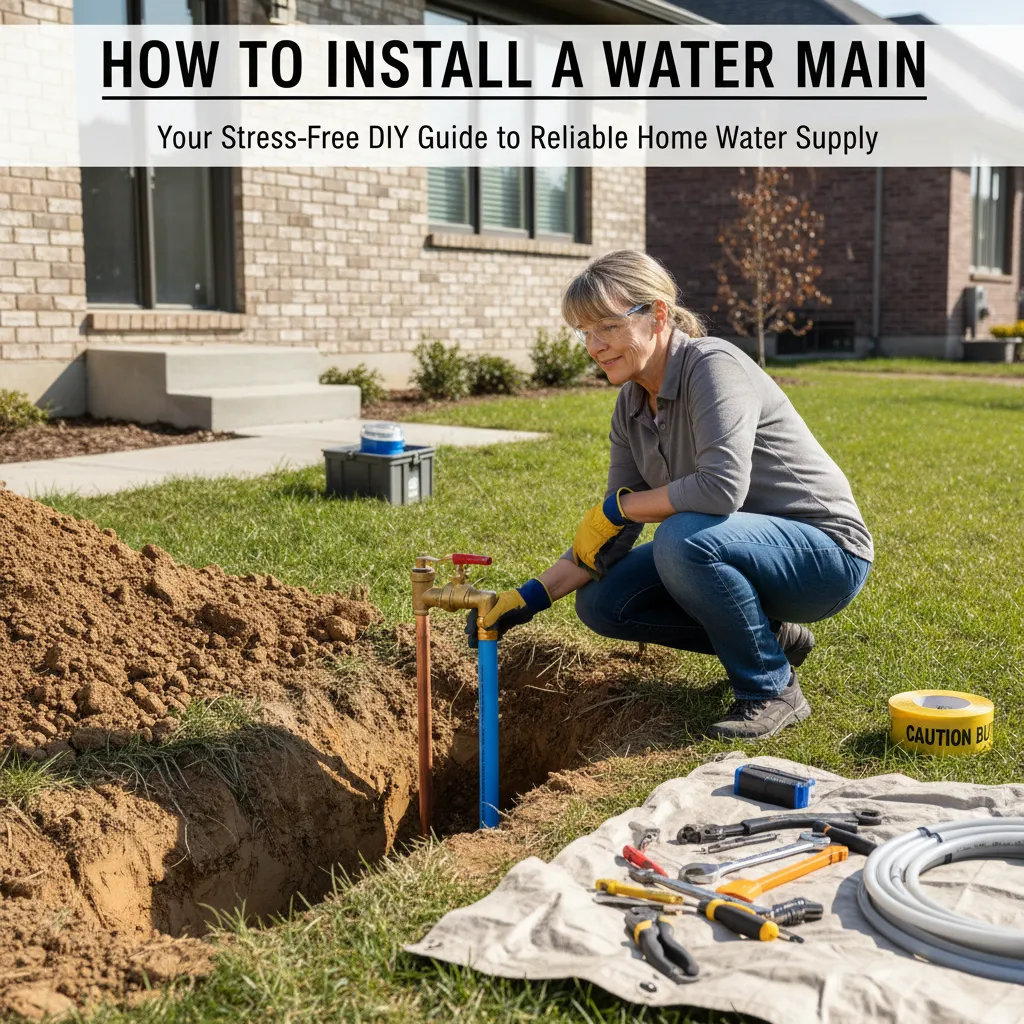
Frustrated with low pressure or leaks? Learn how to safely install a water main yourself with our step-by-step guide. Save thousands while gaining confidence in your plumbing skills!
You're probably here because your morning shower feels like a drizzle, your water looks rusty, or you found an unexpected pond in your yard. Old pipes corrode, tree roots invade, and freezing temps wreak havoc. It's stressful worrying about costly repairs or contaminated water. But here's the good news: Modern materials make DIY installation achievable, and you'll gain total control over your home's water health.
That moment when you turn on the faucet and get a trickle—or worse, discover a muddy puddle where your main water line should be. Your frustration is real, and so is the fear of sky-high plumber quotes. Take a deep breath. With the right guidance, installing a water main is a DIY project you can conquer. This guide walks you through every step safely and clearly, turning panic into plumbing pride.
Tools Needed
- Trenching shovel: For manual digging in tight spaces
- Compact excavator (rental): For trenches over 15 ft (saves hours of labor)
- Pipe cutter: Ensures clean cuts on PEX/copper
- Deburring tool: Removes sharp edges from cut pipes
- Torch kit (for copper): With flame-resistant cloth
- Pressure gauge: Tests for leaks after installation
- Utility locator: FREE service (call 811 before digging!)
- Tamping tool: Compacts soil during backfilling
Materials Needed
- Pipe: 1" PEX-B (flexible/kink-resistant) or Type L copper (durable)
- Fittings: Brass compression couplings (avoid plastic for mains)
- Pipe insulation: Closed-cell foam for freeze protection
- Trench liner: Landscape fabric to prevent debris contamination
- Gradual bends: 45° elbows (smoother flow than 90°)
- Valve: Brass ball valve at house entry point
- Backfill material: Sand (no rocks) for first 6" around pipe
Solution (Intermediate - 2-4 days (varies by trench length/local regulations))
Step 1: Call 811 and Secure Permits
Contact 811 (USA) at least 72 hours before digging—they'll mark underground utilities for FREE. Visit your local building department to get permits; they'll provide depth requirements and inspection details. Tip: Take photos of utility markings—rain can wash them away!
⚠️ Warning: Hitting gas or electrical lines can be fatal. Never skip this step!
Step 2: Plan Your Trench Route
Map the shortest path from street shutoff to your house, avoiding trees and foundations. Slope the trench 1/4" per foot toward the street for drainage. Use string and stakes to mark the line. Pro tip: Rent a laser level to ensure consistent depth—frost lines vary by region (aim for 18-36" deep).
⚠️ Warning: Check local codes! Some areas require 4 ft depth for freeze protection.
Step 3: Dig Smart, Not Hard
Dig trenches 12-18" wide—wide enough to work comfortably. Pile soil on tarps to simplify backfilling. For rocky ground, use a digging bar to loosen soil first. Insider hack: Spray the trench bottom with water before laying sand—it compacts better.
⚠️ Warning: Wear steel-toe boots and trench supports if digging deeper than 3 ft to prevent collapses.
Step 4: Lay Pipe with Care
Lay landscape fabric in the trench, then add 3" of sand. Unroll pipe gently to avoid kinks (especially PEX). Use gradual bends instead of sharp elbows to preserve water pressure. Connect sections above ground first, then lower into the trench. Golden rule: Keep pipe clean—dirt inside causes clogs!
⚠️ Warning: Never solder copper pipes in the trench—flammable gases can accumulate.
Step 5: Connect and Test the System
Attach to the street shutoff using a brass compression coupling. Install a ball valve where the pipe enters your house. Slowly turn on water and check EVERY joint with a pressure gauge—hold 60 PSI for 1 hour. Listen for hisses and check for damp soil. Tip: Wrap joints with toilet paper—it shows tiny leaks clearly!
⚠️ Warning: Shut off street valve completely during testing. Open slowly to avoid pressure surges.
Step 6: Backfill Strategically
Cover pipe with 6" of sand (no rocks!), then lay warning tape 12" above it. Backfill in 6" layers, tamping each down. Save topsoil for last. Bonus: Place a wooden stake at valve locations so you can find them years later.
⚠️ Warning: Never use a mechanical tamper directly over pipes—hand tamp only!
Pro Tips
- Use PEX in freezing climates—it expands without bursting
- Install a drain valve at the low point for winterizing
- Flush the pipe for 10 mins before final connection to remove debris
- Take progress photos for inspections—they love documentation!
- Wrap copper pipes in insulation BEFORE backfilling
When to Call a Professional
Call a pro if: Your trench requires deeper than 4 ft, you hit unexpected rock/boulders, local codes require welded joints, or you lack confidence in pressure testing. Also, if your street connection requires tapping the municipal line—this often legally requires a licensed plumber.
Understanding the Problem in Detail
Water mains fail due to age (galvanized pipes rust internally), ground shifts, or freezing. Corrosion reduces pressure and contaminates water, while leaks spike bills and damage foundations. Modern materials like PEX resist these issues but require proper installation to last 50+ years.
Tools and Materials Guide
PEX-B is affordable and DIY-friendly; copper is pricier but better for high-heat areas. Rent tools from Home Depot—excavator rentals cost ~$200/day but save backbreaking labor. Always use brass fittings—plastic cracks under pressure. Buy 10% extra pipe for mistakes.
Safety Considerations
- Call 811! 2) Wear eye protection when cutting/soldering. 3) Never enter unsupported trenches deeper than waist-height. 4) Use a gas detector if soldering near the trench. 5) Shut off electricity if digging near buried lines.
Troubleshooting Common Issues
Low pressure? Check for kinked PEX or partly closed valves. Dirty water? Flush pipes longer—debris often lingers. Leak at a joint? Tighten compression fittings 1/4 turn—don't over-tighten. Frozen pipe? Use a hairdryer—never an open flame.
Maintenance and Prevention
- Insulate exposed pipes annually. 2) Test pressure yearly—drops indicate hidden leaks. 3) Mark valve locations on your home map. 4) Every 5 years, flush the main via the drain valve.
Cost Analysis: DIY vs Professional
DIY: $500-$1,500 (materials/rentals). Pro install: $3,000-$7,000. Save by: Renting tools, choosing PEX over copper, doing prep work yourself. Splurge on: Brass valves and quality insulation—they prevent future headaches.
Related Plumbing Problems
- Low water pressure: Often caused by old pipes or undersized mains. 2) Discolored water: Rust indicates pipe corrosion. 3) Frozen pipes: Insulate or bury deeper. 4) High water bills: Check for hidden leaks with your water meter.
Frequently Asked Questions
Can I use PVC for my water main?
Not recommended. PVC becomes brittle over time and isn't approved for direct burial in most areas. PEX or copper are safer, longer-lasting choices for mains.
What if I accidentally cut the existing water main while digging?
Immediately shut off the street valve. Keep a repair clamp handy for emergencies. If the cut is clean, use a brass coupling; if jagged, replace that pipe section entirely.
How do I know if my new pipe is the right size?
1" diameter suits most homes. If you have >3 bathrooms or a large garden, consider 1.25". Undersized pipes cause pressure drops—oversized pipes waste money and slow water flow.