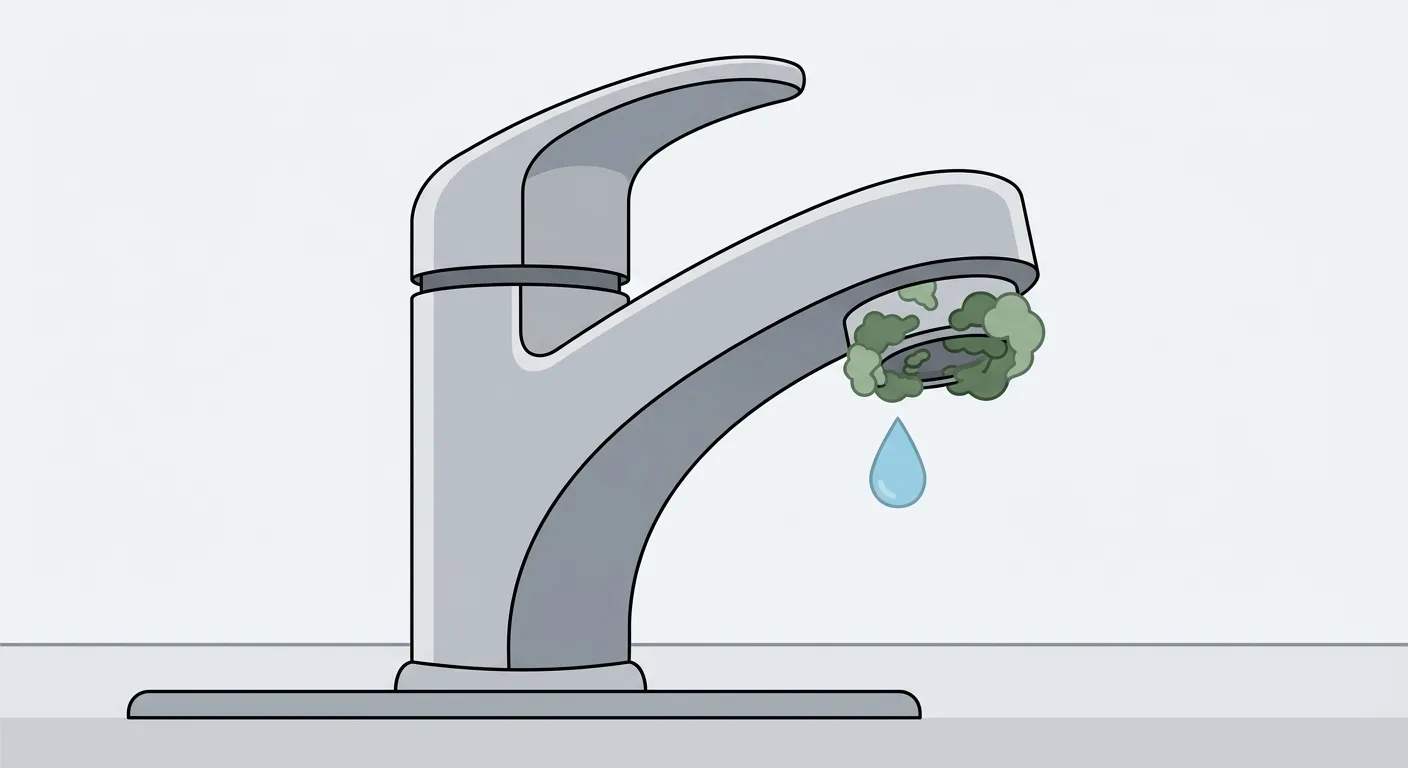
What is That Green Stuff in Your Faucet?
That persistent green buildup clogging your faucet aerator can be one of three different things. Identifying which one you have is key to fixing it permanently. You might also hear it called verdigris — a copper acetate compound that forms when acetic acid reacts with copper 1.
Type 1: Algae Growth (Most Common in Humid Climates)
The green gunk building up in your aerator is most often a type of algae that thrives in warm, humid environments. New Orleans, Houston, Miami, and other coastal or southern cities get hit hardest. This biological growth loves:
- Dark, moist environments (inside aerators is perfect)
- Stagnant water (guest bathrooms, rarely-used outdoor faucets)
- Organic matter in water (from municipal treatment or well water)
- Warm temperatures (above 70°F speeds up growth)
Type 2: Mold/Biofilm
Mold or biofilm is sometimes mistaken for algae. Black-green mold can develop in faucet aerators, especially with hard water or high mineral content. It forms a sticky, slimy layer that traps debris and makes clogging worse.
Type 3: Copper Corrosion (Blue-Green Staining)
If your "green" is more blue-green or turquoise, and it's staining the sink rather than just clogging the aerator, you're dealing with copper pipe corrosion. This happens when:
- Water is acidic (pH below 7.0)
- You have copper plumbing
- Water sits in pipes for extended periods
The key difference: Algae and mold clog and wipe off easily. Copper staining is harder to remove and signals a water chemistry issue that needs a different fix.
Why It Happens: The Science Behind Faucet Deposits
Green deposits form in a straightforward sequence:
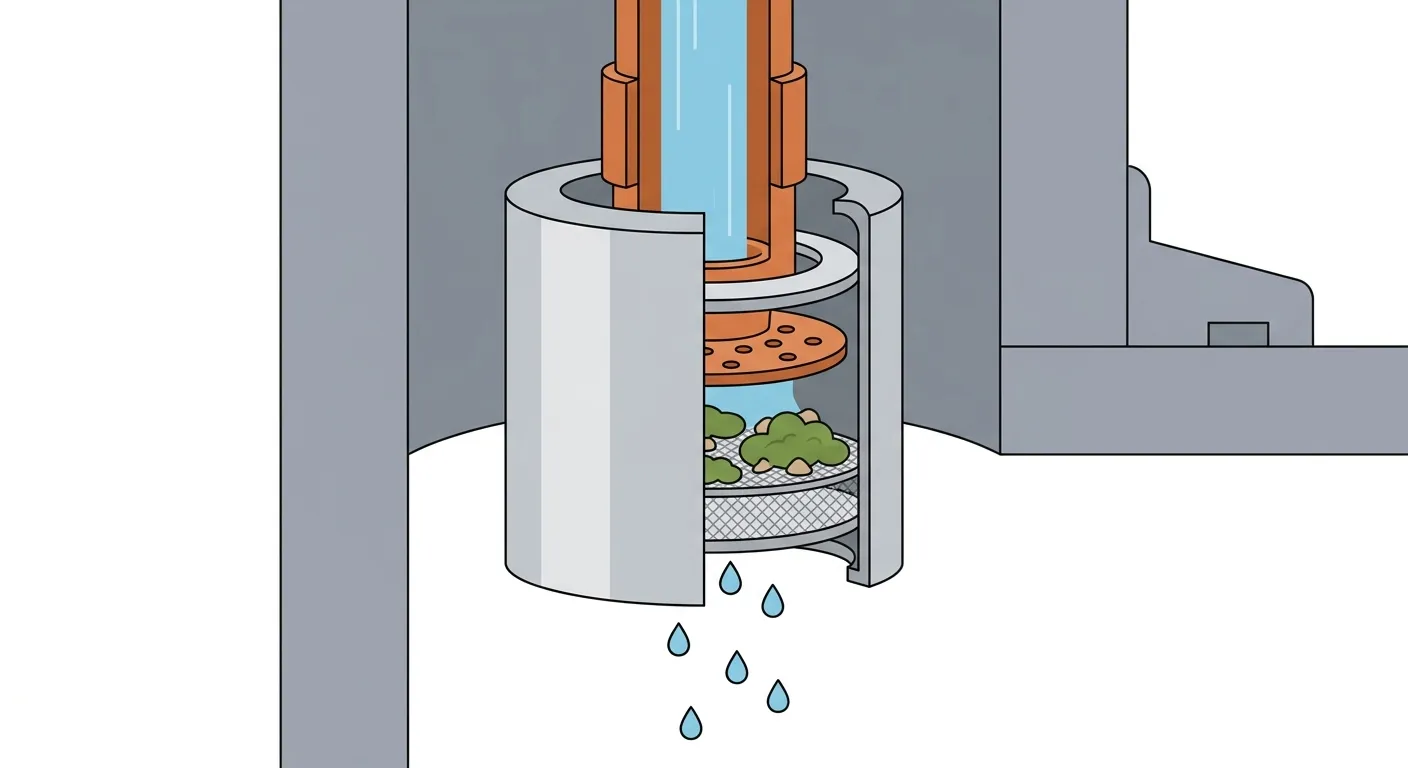
- Water flows through your plumbing carrying tiny particles — organic material, minerals (calcium, magnesium), iron, manganese, and microorganisms
- Particles get trapped in the fine mesh screen of your faucet aerator
- Moisture, darkness, and nutrients create ideal conditions for algae and mold spores to germinate and multiply
- Growth accelerates as the colony establishes, trapping more debris and cutting flow
- Reduced flow means more stagnation, which feeds the cycle
In warm, humid climates, this can happen in just 2–3 weeks.
With copper pipes, the chemistry is worth understanding. The natural patina on old copper — that classic green on the Statue of Liberty — is copper carbonate (CuCO₃). It forms slowly from atmospheric CO₂ and moisture. On surfaces exposed to rain, that process takes 8 to 15 years 3. Verdigris is different: acetic acid meets copper and it can form in days 1. Basic copper carbonate (Cu₂(CO₃)(OH)₂) is the same green solid found naturally as the mineral malachite 2.
One more thing: less than 1% of source water contains more than 0.005 mg/L lead or 1.0 mg/L copper. When these metals show up at the tap, they're coming from corrosion of pipes and fixtures — not the water supply itself 4.
How to Tell Which One You Have
If your green buildup looks slimy, soft, and wipes away easily, you're dealing with algae or mold. If it's a stubborn stain that won't scrub off, it's likely copper corrosion. Verdigris is a mixture of basic copper(II) acetates that can appear green or blue. If you're seeing those hues as a hard stain rather than a soft growth, that's your culprit 3.
How to Remove Green Deposits: Step-by-Step
Quick Clean (Every 2-3 Weeks)
For light maintenance between deep cleans:
- Unscrew the aerator — Use your hand or wrap a cloth around it and use pliers (to protect the finish)
- Disassemble the aerator — Note the order of components (screen, flow restrictor, washer, housing)
- Rinse under running water — Flush out the green material
- Scrub with an old toothbrush — Gently remove stubborn spots
- Reassemble and reinstall — Hand-tighten only; over-tightening can crack the aerator
Time required: 5 minutes
Deep Clean (Monthly or When Heavily Clogged)
For thorough removal and sanitization:
What you'll need:
- White vinegar (acetic acid kills algae and mold)
- Small bowl or cup
- Old toothbrush
- Optional: Baking soda for extra scrubbing power
- Optional: Bleach solution (1 part bleach to 10 parts water) for severe mold
Steps:
- Remove the aerator as described above
- Disassemble completely — Separate the screen, gaskets, and housing
- Soak in white vinegar for 30–60 minutes — This dissolves mineral deposits and kills organic growth
- For stubborn buildup, heat the vinegar slightly (not boiling)
- For severe mold, use dilute bleach solution instead (wear gloves)
- Scrub with toothbrush while soaking — Agitate the vinegar to work into crevices
- Make a paste of baking soda and water and scrub stubborn spots
- Rinse thoroughly with clean water to remove all vinegar or bleach residue
- Dry completely before reassembling — Use a clean towel or air dry
- Reinstall — Don't over-tighten
Time required: 1 hour (mostly soaking time)
Boiling Method (For Stubborn Deposits)
When vinegar alone isn't cutting it:
- Place disassembled aerator parts in a small pot
- Cover with water and 2 tablespoons of vinegar
- Bring to a gentle boil for 5–10 minutes
- Let cool, scrub, rinse, dry
⚠️ Warning: Only do this with metal aerators. Plastic parts may warp and become unusable.
Still Clogged After Cleaning?
If the green stuff keeps coming back almost immediately after cleaning, try this: remove the aerator entirely and run the water for ten minutes. That flushes sediment sitting deeper in the pipe, and experienced plumbers say it often helps 8. If you spot green goop around a pipe joint, working plumbers have noted that a bad solder joint could be the root cause. Corrosion may be sealing a slow leak that's been there since installation. You may need to replace that section of pipe 9.
Prevention: Stop Green Buildup Before It Starts
You don't have to clean your aerators every week forever. Here are proven strategies to cut deposits way down — or eliminate them:
1. Improve Water Flow and Reduce Stagnation
Algae and mold need stagnant water to take hold. Moving water discourages growth.
- Run rarely-used faucets weekly for 2–3 minutes (guest bathrooms, outdoor faucets, basement sinks)
- Don't let water sit in aerators overnight — a quick 10-second flush before bed helps
- Fix any slow drips — even a slight leak creates the humid conditions algae love
2. Keep Faucets Dry
Moisture and darkness together are where algae thrives. Break the moisture cycle and growth stops.
- Wipe faucets dry after each use, especially in high-humidity bathrooms
- Improve bathroom ventilation — run the exhaust fan during and for 20 minutes after showers
- Fix persistent dampness around faucet bases (that usually means a leak at the mounting)
3. Install a Water Filter
Filters remove organic matter, minerals, and microorganisms before they reach your aerator.
- Faucet-mounted filter (Brita, PUR) — Easy, affordable, cuts particles dramatically
- Under-sink filter system — Pricier but highly effective and longer-lasting
- Whole-house sediment filter — Best if multiple faucets are affected. One homeowner who dealt with this exact problem recommended installing a filter off the main line to catch sediment before it ever reaches your faucets 8.
Expected result: Can reduce algae buildup by 70–90% in most cases
4. Regular Preventive Cleaning Schedule
Weekly (30 seconds): Quick visual check and wipe dry after use
Every 2–3 weeks (5 minutes): Remove aerator, rinse, reassemble
Monthly (1 hour): Deep vinegar soak, full disassembly clean
Deposits never get a chance to establish. Flow stays strong.
5. Address Water Quality Issues
If your entire neighborhood has this problem, the fix starts at the source.
For algae and biofilm:
- Contact your water utility about elevated organic content. Chloramine is a stable disinfectant used in distribution systems to control biofilm 7 — your utility may already be treating for this.
- Well water: Consider UV sterilization or a chlorination system
- Home water test kits run about $20–50
For copper corrosion (blue-green staining):
- Test your water pH — it should be 6.5–8.5; below 7.0 is corrosive
- Install a pH neutralizer or calcite filter to bring the pH up
- Consider a whole-house water softener if you also have hard water
6. Upgrade to Anti-Microbial Aerators
Some manufacturers now make aerators with silver ion technology or anti-microbial coatings that inhibit algae and mold. Options include Neoperl (a popular OEM supplier), Delta Faucet antimicrobial aerators, and Moen antimicrobial models. Expect to pay $5–15 per aerator. They typically last 2–5 years before replacement.
When to Call a Professional Plumber
Get professional help if:
- Multiple faucets throughout the house are affected — points to a whole-house water quality problem
- You see blue-green staining on sinks and fixtures — copper corrosion requires water treatment
- Green slime appears in toilets, shower drains, or other fixtures — biofilm in the pipes needs professional treatment
- Deposits return within days even after cleaning — there's an underlying plumbing or water contamination issue
- Water quality or taste suddenly changes — could be municipal system changes or well contamination
- Low water pressure persists even after aerator cleaning — buildup may be deeper in the pipes
Professional solutions may include whole-house water testing, pipe camera inspection, water softener or filtration installation, pH adjustment systems, or pipe replacement if corrosion is severe.
Related Faucet Problems
Green deposits often show up alongside other issues:
- Low water pressure — A clogged aerator restricts flow; cleaning restores it
- Sputtering faucets — Air trapped by biofilm; flush lines and clean the aerator
- Foul odors from faucet — Mold or biofilm in the aerator or P-trap; deep clean or replace
- Discolored water — Brown or orange means iron; green or blue means copper corrosion
Special Considerations for Different Climates
Humid and Warm Climates (South, Coastal Areas):
- Expect faster algae growth — every 2–3 weeks versus 1–2 months in dry climates
- Moisture control is critical; keeping faucets dry matters more here
- Consider a bathroom dehumidifier if humidity regularly exceeds 60%
Hard Water Areas (Southwest, Midwest):
- You may see white or tan mineral deposits mixed with the green algae
- A vinegar soak addresses both at the same time
- A water softener reduces mineral content long-term
Well Water Homes:
- Higher organic content and iron accelerate algae growth
- Test your well water annually; consider UV sterilization or chlorination
- Shock-chlorinate the well if you see a sudden spike in biological growth
Health Concerns: Is Green Faucet Buildup Dangerous?
Generally, no — but there are some caveats.
Algae and mold in aerators are usually not harmful to healthy people. Sensitive individuals may have allergic reactions. Anyone who is immunocompromised should avoid contact. Drinking small amounts through tap water is typically safe — but there's no reason to leave it there.
When to pay more attention:
- Black mold (Stachybotrys) — rare in aerators, but sanitize thoroughly if you find it
- Foul smell — indicates decomposing organic matter; replace the aerator
- Slimy biofilm throughout the house — that needs professional treatment
There's a broader picture too. Research shows metals and total dissolved phosphorus often co-occur in urban streams — with drinking water infrastructure corrosion as a shared source 6. The same pipe corrosion causing your green stains is part of that chain.
Cost Analysis: Prevention vs. Replacement
DIY Cleaning:
- Vinegar: $2–3 per bottle (lasts months)
- Toothbrush: $1–2
- Time: 5–60 minutes depending on cleaning type
- Total: $3–5 plus your time
Aerator Replacement:
- Standard aerator: $3–8
- Premium anti-microbial: $8–15
Water Filter Options:
- Faucet-mount filter: $20–40 plus $5–10/month for replacement cartridges
- Under-sink system: $100–300 installed
- Whole-house sediment filter: $300–800 installed
Professional Plumber Visit:
- Diagnostic and water testing: $150–300
- Treatment and installation: $500–2,000+ depending on the solution
Regular DIY cleaning ($5–10/year) beats replacing aerators every few months ($30–60/year) for most households. A whole-house filter ($100–300 upfront, $60–120/year) makes sense if multiple fixtures are affected.
What to Do Next
Green stuff in your faucet aerator is annoying, but it's manageable. You now know how to identify the type — algae, biofilm, or copper corrosion — and how to fix it. Keep faucets dry, flush rarely-used ones weekly, clean aerators monthly, and add a filter if you're in a high-risk area. Those habits add up to clear-flowing faucets with minimal scrubbing.
If the buildup keeps coming back after a few cleaning cycles, call a licensed plumber. Persistent deposits usually signal something deeper — and catching it early costs a lot less than dealing with it later.