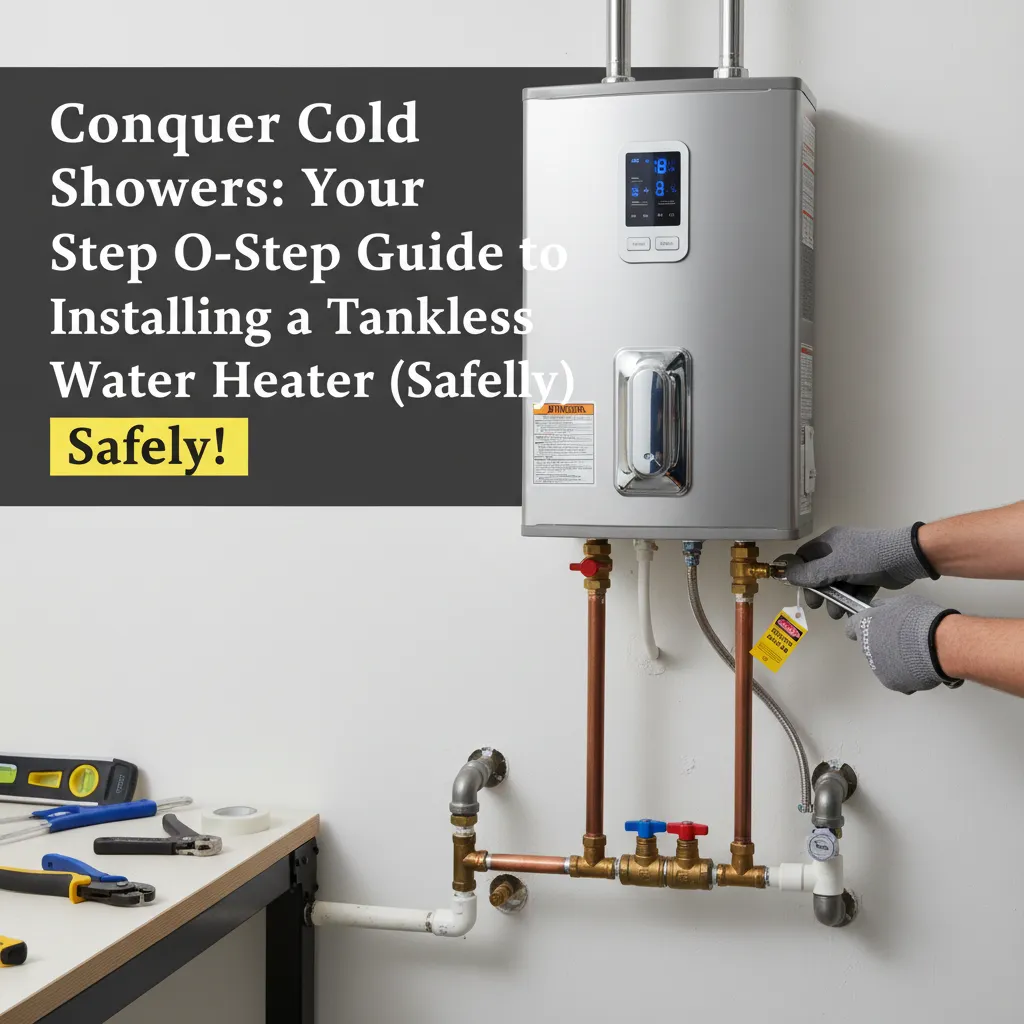
You're fed up with the limitations of your old tank heater: running out of hot water just as you rinse shampoo, watching your energy bill climb to keep 40+ gallons hot 24/7, or dreading the inevitable replacement of a bulky, leaking tank. The promise of endless hot water, space savings, and energy efficiency from a tankless unit is incredibly appealing. But the installation process – involving gas lines, water connections, venting, and potentially electrical work – feels like a maze designed for professionals. The fear of making a costly or dangerous mistake is real. We get it. This guide is designed to cut through that overwhelm.
That icy shock mid-shower? The dread of guests using all the hot water? Or maybe those frustratingly high energy bills for a tank that's always 'on'? If you're dreaming of endless hot water and lower costs, installing a tankless water heater is a game-changer. But the process can feel daunting. Take a deep breath! This guide breaks it down step-by-step, turning complex plumbing and electrical work into a manageable DIY project. We'll cover everything from choosing the right unit to firing it up safely, giving you the confidence to tackle this upgrade.
Tools Needed
- Pipe Wrenches (2 - for gripping and turning pipes)
- Adjustable Wrenches (Multiple sizes)
- Tubing Cutter (For clean copper cuts)
- Deburring Tool (To smooth cut pipe ends)
- Propane Torch & Solder/Flux (For copper joints, if applicable)
- Pipe Thread Sealant (Gas-rated Teflon tape or pipe dope)
- Gas Leak Detector Solution (Soapy water works, commercial spray is better)
- Voltage Tester/Non-Contact Voltage Detector (ESSENTIAL for electrical safety)
- Screwdrivers (Phillips & Flathead)
- Drill & Bits (For mounting unit and venting)
- Hole Saw Kit (For vent pipe through walls/roof)
- Level (To ensure unit is mounted straight)
- Tape Measure
- Safety Glasses & Gloves
Materials Needed
- Tankless Water Heater Unit (Correctly sized for your home's GPM/BTU needs)
- Vent Kit (Type specified by manufacturer - concentric, PVC, stainless AL29-4C)
- Gas Line Upgrade Pipe/Components (If needed - typically 3/4" black iron pipe, fittings, shut-off valve)
- Water Supply Lines/Fittings (Correct type/size - copper, PEX, CPVC, flex connectors)
- Gas Flex Connector (Appliance connector, length as needed)
- Dielectric Unions or Brass Nipples (To prevent galvanic corrosion between dissimilar metals)
- Sediment Filter (Highly recommended for inlet water line)
- Pressure Relief Valve & Discharge Tube (If not integrated, check local code)
- Mounting Hardware (Lag bolts/screws suitable for wall type)
- Pipe Insulation (For hot water lines)
- Condensate Drain Line & Trap Kit (For condensing gas units)
- Electrical Cable & Breaker (If electric unit - gauge/type per unit specs & code)
Solution (Advanced - 6-10 hours (spread over 1-2 days, highly dependent on complexity))
Step 1: Plan & Prep: Your Blueprint for Success
This is THE most crucial step! Read your unit's manual thoroughly. Choose the installation location near existing gas/water lines and with proper clearance for venting and service access. Calculate your home's peak hot water demand (Gallons Per Minute - GPM) to ensure unit sizing is correct. Check local plumbing, gas, and electrical codes – permits are often required. Gather ALL tools and materials beforehand. Turn OFF main water supply, gas supply (at meter/appliance valve), and electrical power to the old heater at the breaker.
⚠️ Warning: NEVER skip permit research or code checks. Gas and electrical mistakes are serious fire/hazard risks. If your gas line needs upgrading, this is often a pro job.
Step 2: Remove the Old Tank Heater (If Applicable)
Drain the old tank completely via the drain valve (connect a hose!). Disconnect water lines (hot & cold), gas line (using two wrenches), electrical (confirm power is OFF!), and vent pipe. Carefully remove the old unit. Cap the open gas line IMMEDIATELY with a proper fitting. Cap water lines if not connecting immediately. Clean and prep the area.
⚠️ Warning: Tanks are HEAVY when full. Drain completely first! Wear gloves – edges are sharp. Beware of residual hot water/sediment when draining.
Step 3: Mount the Tankless Unit Securely
Position the mounting bracket according to the manual, ensuring it's level and secured firmly into wall studs with appropriate lag bolts. The unit must be perfectly level for proper operation and drainage. Carefully lift and hang the unit on the bracket. Double-check stability.
⚠️ Warning: Units are heavy! Get help lifting. Mounting only to drywall without hitting studs is unsafe and will likely fail.
Step 4: Install Venting (Critical for Gas Units!)
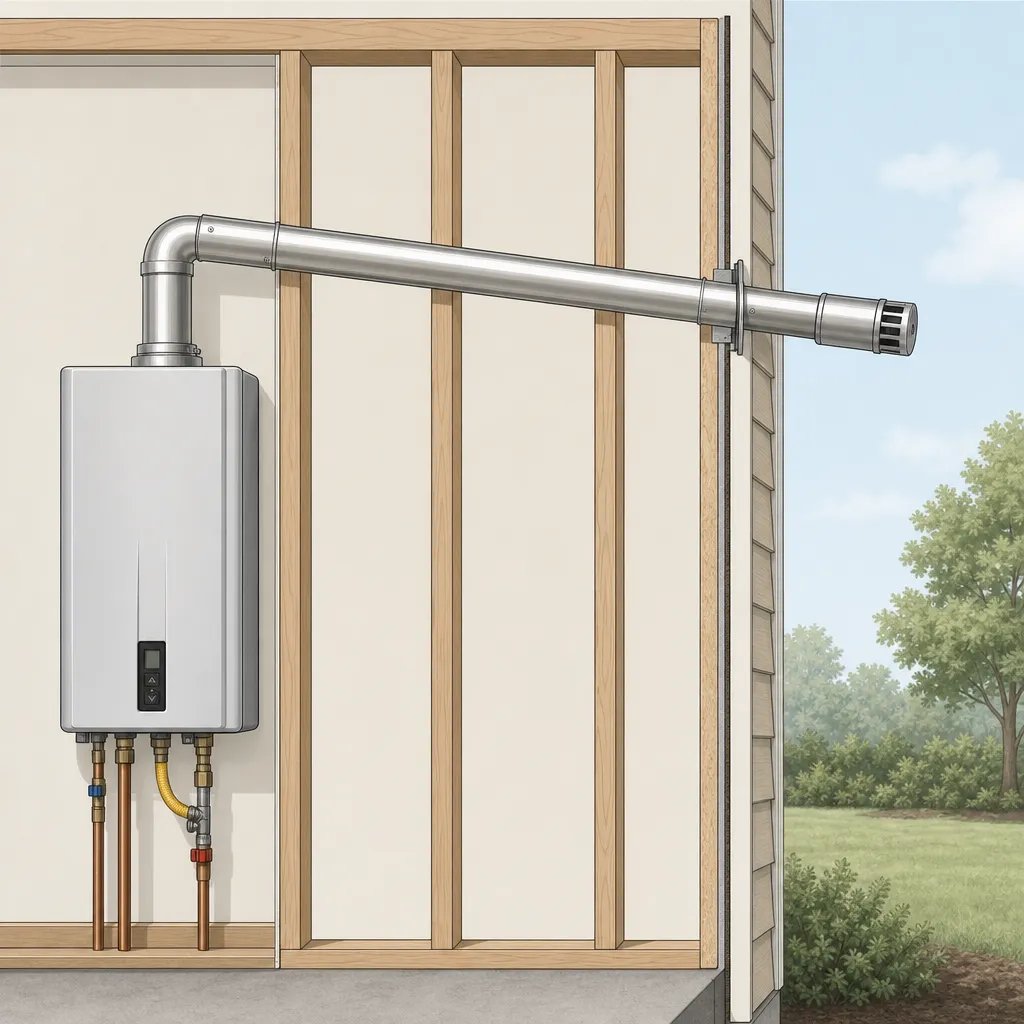
Follow the manufacturer's venting instructions EXACTLY. Use ONLY the specified vent material (stainless steel, PVC). Maintain required clearances from combustibles and proper pitch (usually 1/4" per foot downward towards termination for condensation). Seal all joints per instructions. Run vent pipe through the wall/roof using the hole saw. Install the termination cap outside, ensuring proper clearances from windows, doors, and air intakes. This is non-negotiable for safety and performance.
⚠️ Warning: IMPROPER VENTING IS A MAJOR CAUSE OF CARBON MONOXIDE POISONING AND UNIT FAILURE. Never mix vent types or exceed max length/elbow limits. Roof terminations require proper flashing.
Step 5: Connect Water Lines (Hot & Cold)
Install the included isolation valves or sediment filter on the cold water inlet. Use dielectric unions or brass nipples between the unit's copper connections and your home's pipes (steel/galvanized) to prevent corrosion. Connect cold water supply to the unit's inlet (marked 'Cold' or 'In'). Connect the hot water line to the unit's outlet (marked 'Hot' or 'Out'). Support pipes properly. Use pipe dope or Teflon tape on threaded fittings.
⚠️ Warning: Mixing metals (copper to steel) without dielectric protection causes rapid corrosion and leaks. Ensure inlet/outlet are correct – reverse connection damages the unit.
Step 6: Connect the Gas Line (Gas Units Only - Proceed with Extreme Caution)
This is where most DIYers should strongly consider a pro. If proceeding: Connect a new gas shut-off valve within sight of the unit (code requirement), then connect to the unit's gas valve. Use a new, correctly sized and rated flexible appliance connector. Apply gas-rated pipe thread sealant (Teflon tape yellow for gas or pipe dope) ONLY to the male threads. Tighten fittings securely with two wrenches. DO NOT OVERTIGHTEN.
⚠️ Warning: GAS LEAKS ARE EXPLOSIVE HAZARDS. If you smell gas, STOP immediately, evacuate, and call the gas company. Test ALL connections meticulously with leak detector solution after pressurizing. Never use standard white Teflon tape on gas.
Step 7: Connect Electrical (If Required)
Electric units need dedicated circuit(s). Run appropriate gauge wire in conduit (if required by code) from a new, correctly sized breaker in your main panel to the unit. Connect wires to the unit's terminals per the wiring diagram (usually L1, L2, L3, Ground). Double-check voltage requirements (120v/240v).
⚠️ Warning: ELECTRICAL WORK CAN BE LETHAL. Power MUST be OFF at the breaker. Ensure breaker is correctly sized for the unit's ampacity. If unsure, hire a licensed electrician.
Step 8: Prime, Purge, Power & Test
Open the main water supply SLOWLY. Open the cold and hot isolation valves on the unit. Open several hot water faucets in the house to purge air from the lines – let them run until smooth. For gas units, turn on the gas supply and meticulously re-check EVERY gas connection for leaks with detector solution (bubbles = leak!). Plug in the unit or turn on the breaker. Follow the manufacturer's startup procedure (often involves setting temp/dip switches). Test hot water flow at multiple fixtures. Check for leaks again!
⚠️ Warning: Purging air is vital to prevent sensor lockouts. SLOWLY open water valves to avoid water hammer. Re-test gas leaks AFTER pressurizing and during initial firing. Monitor closely for the first hour.
Pro Tips
- Flush the unit annually with vinegar using a service kit to prevent mineral buildup (CRITICAL for longevity!).
- Install an isolation valve kit with service ports – makes future flushing MUCH easier.
- Insulate ALL hot water pipes within 5-10 feet of the unit for faster delivery.
- Take pictures of your plumbing/gas before disassembly for easy reference.
- Use pipe dope AND gas-rated Teflon tape on gas fittings for a more secure seal (check local code).
- Consider a WiFi module for remote monitoring/temperature control.
When to Call a Professional
Call a licensed plumber or HVAC technician if: Your gas line needs significant modification or upsizing; You're uncomfortable with ANY gas or electrical work; Your venting requires complex routing or a long chimney; Local codes mandate licensed installation; You encounter unexpected problems like corroded pipes or structural issues; You simply don't feel confident. Gas and electricity are not areas to guess. Safety is paramount.
Understanding the Problem in Detail
Tank water heaters constantly heat a big reservoir of water, wasting energy when you're not using it. They also run out. Tankless heaters heat water only when you need it—on demand—by passing cold water over a powerful heat exchanger (gas burner or electric element). This saves energy (up to 30%+) and gives you endless hot water. The complexity comes from the high power demand (BTU for gas, Amps for electric) needing proper fuel supply, venting combustion gases safely (gas), and managing water flow.
But here's where DIYers often stumble: the details that keep you safe and up to code. One common mistake is skipping the sediment trap (drip leg) on the gas line, which is required by code per NFPA 54 1. Without it, debris and moisture can foul the gas valve, leading to poor performance or a dangerous situation. Another frequent issue is improper venting—some installers run exhaust into mechanical rooms without proper clearance, violating manufacturer instructions 2. Venting must follow the manufacturer's specs and NFPA 54 clearance requirements to prevent carbon monoxide buildup. Get these wrong, and you're not just risking a failed inspection; you're risking your safety.
Tools and Materials Guide
You'll need the right gear before you start—nothing's worse than a mid-job hardware store run. Here's what to gather.
Pipe Wrenches: 14" & 18" cover most needs. Rent larger ones if you're wrestling with stubborn fittings.
Tubing Cutter: Get a quality one for clean, square cuts on copper. A dull cutter will crush the pipe and leave you with a leaky joint.
Vent Kit: MUST match unit specs (e.g., 3" AL29-4C stainless for high-efficiency gas). Buy complete kits. Venting must be sized according to manufacturer specs: maximum 100 feet total, deduct 5 feet per elbow, max 5 elbows 3. Single-wall metal vent connectors must be secured with at least 3 screws per joint and no tape allowed 4.
Gas Pipe: Black iron is standard; ensure diameter supports BTU demand. For a typical whole-house gas tankless water heater, you need a gas supply line of at least 3/4-inch, but check NFPA 54 tables for exact sizing based on length and BTU load 5. A 200,000 BTU unit at 50 feet may require a larger pipe—don't guess, look it up 5. You must install a sediment trap (drip leg) on the gas line before the water heater, as required by NFPA 54 6.
Water Connections: Use braided stainless flex connectors or hard pipe (copper/PEX) with dielectric protection.
Gas Sealant: Yellow gas-rated Teflon tape or RectorSeal #5.
Sediment Filter: 50-micron spin-down type is ideal. Find most items at hardware stores (Home Depot, Lowe's) or plumbing supply houses.
Safety Considerations
A tankless water heater can slash your energy bills and give you endless hot showers, but it also brings serious risks if you cut corners. Take a deep breath—you’re not alone in wanting to get this right. We’ll walk through the must-know safety steps so you can install with confidence.
Gas: Leaks are catastrophic. If you smell gas, evacuate immediately and call 911 or your gas company. Test every fitting with a leak detector solution before you fire up the unit. You’ll also need to make sure the combustion air openings provide at least 1 square inch of free area per 3,000 BTU/hr of total input rating, as required by NFPA 54 6. Some local codes may demand 50 cubic feet of space per 1,000 BTU, so check with your building department.
Electricity: Turn the power off at the breaker and verify with a voltage tester before touching any wires. Even a brief shock can be deadly.
Water: Shut off the main water supply before cutting into pipes. You don’t want a surprise flood.
Venting: Incorrect venting causes deadly carbon monoxide poisoning. Follow the manufacturer’s manual exactly for material, clearances, and slope. The vent termination must be at least 36 inches above grade for appliances over 100,000 BTU/h, and 3 feet above any forced air inlet within 10 feet horizontally, per NFPA 54 6. Double-check these measurements—CO is odorless and kills silently.
Mounting: Secure the unit firmly to structural studs. A falling heater can rupture gas or water lines.
Work Area: Keep it clean, well-lit, and ventilated. Clutter leads to trips and mistakes.
Personal: Wear safety glasses and gloves. Metal shavings and sharp edges are everywhere.
CO Detector: Install one near bedrooms and test it monthly. It’s your last line of defense.
Pressure Relief: Ensure the pressure relief valve is functional and piped to a drain. A malfunctioning valve can turn your heater into a bomb.
Troubleshooting Common Issues
When your tankless heater acts up, it's usually something simple you can fix yourself. Let's walk through the most common headaches and how to sort them out.
No Hot Water: First, check the obvious—is the power on? For electric units, make sure the breaker hasn't tripped. For gas, verify the gas valve is open and the unit is getting fuel. Confirm both the cold-water inlet and hot-water outlet valves are fully open. If everything looks right, you might have air in the lines—purge it by running hot water at a faucet for a few minutes. Still nothing? Look for an error code on the display and consult your manual.
Fluctuating Temperature: This usually points to a flow issue. Check the inlet filter screen for debris—it's a small mesh part that can clog and restrict water flow. Clean it out and see if that steadies things. Also, make sure your unit is sized correctly for how many fixtures you're running at once; a too-small heater can't keep up with simultaneous demands.
Common codes often relate to ignition failure (check gas supply and venting for blockages), flow sensor problems, or overheating. Don't ignore them—they're telling you exactly what's wrong.
Low Flow: If water pressure is weak, start with the inlet filter again. Sediment can also build up in faucet aerators, so unscrew and clean those. Make sure no pipes are kinked or pinched anywhere along the line.
Vent/Alarm Error: For gas units, check the vent termination outside—leaves, nests, or snow can block it. Ensure clearances are correct per your manual. If you have a condensing unit, the condensate drain might be clogged; clear it out and check the trap.
Still No Luck? If you've tried all this and the unit still won't behave, there's one thing that trips up a lot of DIY installs: skipping the service valves and flush kit. Without them, you can't properly descale the heat exchanger, and mineral buildup will kill the unit early. One experienced plumber put it bluntly: "No service kit? It's going to need to be flushed if you want it to last." 7 If you didn't install isolation valves and a flush kit during setup, it's worth adding them now—they let you hook up a pump and run vinegar or a descaling solution through the system to clear out scale. This isn't just a nice-to-have; it's essential maintenance that keeps your warranty valid and your hot water endless.
Maintenance and Prevention
If you've ever had a tankless heater suddenly deliver lukewarm water or shut down mid-shower, you know the frustration of neglected maintenance. The good news? A little routine care keeps your unit humming along for years. Annual descaling with a vinegar or citric acid solution is essential to prevent mineral buildup and maintain efficiency 7. You'll need a recirculating pump kit and about an hour—45 to 90 minutes is typical. Hook up the hoses, fill the bucket with white vinegar, and let the pump do the work. Don't skip this: scale buildup is the number one reason tankless heaters lose performance.
While you're at it, clean the inlet filter every 3 to 6 months. It's a small screen that catches debris before it enters the unit, and a clogged filter can starve the heater of water flow. Just pull it out, rinse it under a faucet, and pop it back in. Periodically inspect for leaks, soot (a sign of bad combustion), or vent damage. If you see soot, shut the unit down and call a pro—it's a safety issue. Many units store error logs, so check those too; they can tip you off to intermittent problems before they become full-blown failures. Finally, pay attention to changes in flow or temperature consistency. If your hot water starts fluctuating, it's often the first whisper of scale buildup or a dirty filter.
⚠️ Warning: Before opening any access panels or touching internal components, turn off the power and gas supply. Even with the cover off, capacitors can hold a charge—don't rely on the unit being "off" until you've verified with a multimeter.
Still getting error codes or poor heating after a flush? Common culprits are a partially closed service valve or a pump that wasn't fully primed. Double-check that both service valves are fully open and that you've purged all air from the flush lines. If the problem persists, the heat exchanger might need a professional descaling with a stronger solution.
Cost Analysis: DIY vs Professional
Staring at a tankless water heater price tag can make your stomach drop—especially when you're already fed up with cold showers and climbing energy bills. Take a deep breath. You're not alone in wondering whether to tackle this yourself or call in a pro. The numbers break down like this: a point-of-use electric unit runs $300–$600, while a whole-home gas or electric model jumps to $600–$1,500. If you go DIY, you'll spend another $200–$800 on materials—think $150–$400 for a vent kit, $50–$300 for pipe and fittings, and maybe $50–$100 for odds and ends. Hiring a licensed plumber? That'll set you back $1,500 to $4,500 or more, labor and materials included. So DIY can save you $1,000–$3,000+, but only if everything's done safely and to code.
Before you commit, get at least three quotes from licensed plumbers in your area. Prices swing wildly depending on your home's setup, local permit fees, and how busy the trades are. Those quotes also give you a reality check on hidden costs you might not have spotted—like a gas line upgrade ($500–$2,000), an electrical panel upgrade ($1,000–$3,000), or permits ($50–$300). Once the heater's running, you can expect a 20–30% drop in your water heating energy bills, which helps soften the upfront sting.
Related Plumbing Problems
Insufficient Hot Water Flow: Often due to an undersized unit or a clogged filter. Cold Water Sandwich: That brief cold burst between hot uses — a recirculation pump can help. Mineral Buildup (Hard Water): Requires diligent flushing, and possibly a water softener. Vent Condensation/Icing: Poor termination location or design. Gas Pressure Issues: Requires a pro assessment. Water Pressure Drop: Could indicate undersized pipes or unit flow limitations.
Frequently Asked Questions
Can I really install a tankless water heater myself?
Yes, it's possible for experienced DIYers comfortable with plumbing, gas (if applicable), and electrical work. But it's an Advanced project. Gas line modifications and complex venting are strong reasons to hire a pro. Be brutally honest about your skills, prioritize safety, check codes, and get permits. If you're in doubt at any point, call a professional.
Do I need to upgrade my electrical panel for an electric tankless?
Very likely, yes. Electric tankless units demand huge amounts of power—often 80-150+ Amps at 240V. Most standard home panels (100-200 Amp service) can't handle this added load without significant upgrades, potentially costing thousands. Always calculate the total amperage requirement and consult an electrician before purchasing an electric unit.
Why is my new tankless heater giving lukewarm water?
This usually means the unit isn't getting enough flow to activate properly, or it's undersized. Check: 1) Is the inlet water filter clogged? Clean it. 2) Are the water isolation valves fully open? 3) Are you trying to run too many hot fixtures at once (exceeding the unit's GPM capacity)? 4) Is the temperature set point too low? Increase it slightly. 5) Is the gas supply sufficient (for gas units)?
How close can I mount the unit to my shower?
You can mount it close, but it's not always ideal. Mounting too close (especially gas) might mean longer vent runs or noise concerns. Focus on proximity to existing gas/water lines and proper venting access. The key is minimizing the time for hot water to arrive, best achieved by insulating pipes and potentially adding a recirculation system, not just proximity.
Is a tankless water heater worth the cost?
For most homeowners, yes, but the payback period varies. You'll save significantly on energy bills (20-30%+) by not heating standby water. You gain endless hot water and free up floor space. The higher upfront cost (unit + install) is offset over time by savings, especially if you live there 10+ years. Factor in your hot water usage, energy costs, and how long you plan to stay.