What is a backwater valve and how does it work?
A backwater valve is a one-way flap or gate in the building drain that closes when the public sewer surcharges and opens again when flow returns to normal 1. It's the mechanical answer to a nasty problem: sewage flowing backward into your basement when the municipal line can't keep up.
But the valve only protects when the surcharge head in the public sewer rises above the fixture's flood-level rim. That's the elevation of the lowest fixture opening — a basement floor drain or laundry sink is the usual trigger, not the whole house. So elevation and branch location matter as much as the device itself. If your lowest drain sits above the manhole cover elevation, you likely don't need one.
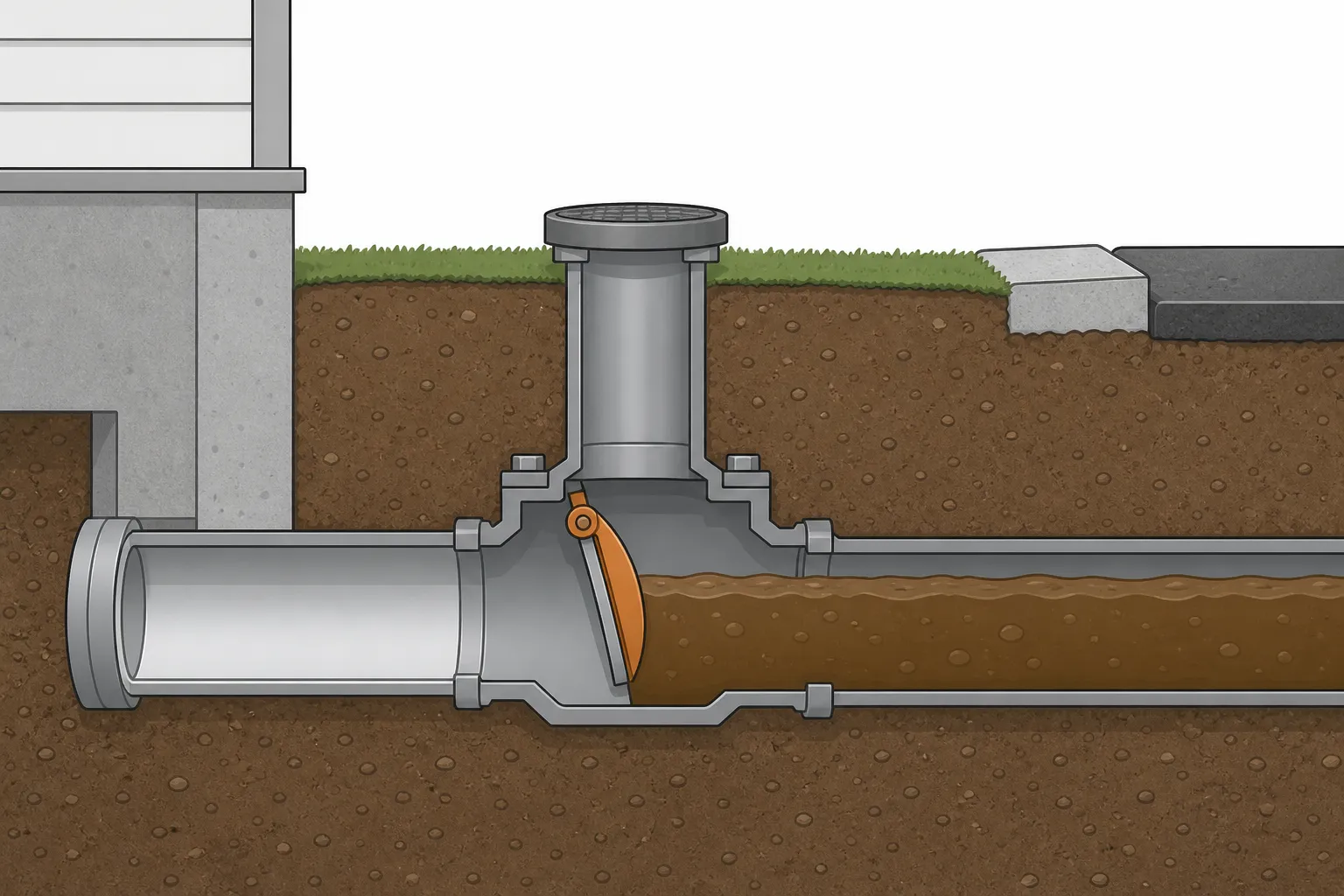
When open, the valve must not choke flow — it needs capacity not less than the pipe it serves. When closed, it must provide a mechanical seal, with the flap hanging partially open under no backwater pressure so it can slam shut the moment sewage tries to reverse 2. That's the difference between a backwater valve and a simple check valve: the mechanical seal is designed to hold against actual sewage, not just water.
Experienced plumbers often point out that a backwater valve isn't a substitute for proper grading or a working sump pump. It's one layer in a drainage system that has to work together.
Do I really need a sewer backwater valve?
The code trigger isn't a general fear of rain. It's whether your finished floor sits below the next upstream manhole cover. IPC 714.1 says fixtures on a floor below that elevation shall be protected by a backwater valve 1. If your basement floor is above the next manhole lid, the model code doesn't require one.
But some jurisdictions go further. The City of Kyle amended the 2021 IPC to require backwater valves for all new and retrofit installations, exceeding the IPC baseline 3. So check your local amendment before assuming you're exempt.
In other cities the mandate only applies inside designated flood hazard areas. NYC's 2022 Plumbing Code Section 715.1 requires backwater valves in buildings within flood hazard areas subject to overflow risk, with no requirement outside those areas 4. Location decides whether the code applies to you.
If you're unsure, call your local building department. They'll tell you if your address falls under a stricter rule or a flood zone requirement.
Backwater valve vs. backflow preventer: what's the difference?
A backwater valve protects your drainage from sewer surcharge. A backflow preventer protects your potable water supply from cross-connection. They're tested and permitted differently, so don't confuse the two. Backflow preventer installation runs $150–$450, with annual testing at $70–$350 and permits around $50 5.
Backwater valves come in two main styles. Normally-open flap valves hang partially open and seal only under backpressure. Normally-closed gate valves stay shut and open on forward flow, trading debris resistance for head loss and periodic service 6. The Mainline #4963 Full-Port uses a patented normally-open gate that vents sewer gases and has a Clear View top for inspection; gate-style valves need periodic service 6.
Typical bodies are 3-inch and 4-inch PVC or ABS. They must be installed on a horizontal run with the flap oriented to flow direction, and the 1/4 inch per foot slope maintained through the body 7.
How much does backwater valve installation cost?
Backwater valve installation cost depends on whether it's a new-construction install in an open trench or a retrofit into an existing slab. A slab-cut retrofit with an access hatch typically runs $1,500–$4,000. A new-construction install in an open trench runs $400–$900 8. HomeServe cites $200–$1,000 for a basic valve-and-labor install, though that figure doesn't account for the concrete cutting and access hatch work a retrofit requires 8.
Before committing to a retrofit, it's worth having a camera inspection of the existing line. A collapsed or root-blocked line won't be fixed by a valve. You'd be paying for slab work that doesn't solve the real problem. Experienced plumbers consider this standard practice before cutting a slab or altering the building drain.
If you're weighing a retrofit against other options, get at least two written quotes. The price swings come from access difficulty, floor type, and whether the valve needs an access hatch for maintenance. A plumber who skips the camera inspection is guessing. You'll pay for that guess in the long run.
Can I cut down the backwater valve access sleeve?
If your backwater valve is buried under a concrete floor, it needs an access sleeve with a removable, gasketed cap that ends at or above the finished floor so you can inspect and service it later 9. Cutting that sleeve down to fit a floor cover is tempting. Some homeowners have done it flush with the floor without problems. But you need to keep two things in mind: the permanent identification tag must stay visible, and the cap still has to seal properly. Working plumbers point out that code requires a permanent, easily identifiable tag stating it's a backwater valve. Don't bury that tag or make it unreadable.
Before you cut anything, check the bury depth for your specific valve model against the drain-to-floor dimension. For example, the JR Smith Flood-Gate model 7140Y04 needs 9 inches from the top of the horizontal drain to the top of the floor drain. The 7140Y06 needs 14 inches 10. If you're not sure about your valve's required depth, don't guess — call a plumber to verify before the slab gets closed up.
Why does my basement smell like sewage after it rains?
A sewage smell in your basement after heavy rain is often traced to a backwater valve or soil pipe with a missing or loose cap, not just a city sewer surcharge. One homeowner reported the smell traced to the cleanout cover on a backwater preventer. Working plumbers advise inspecting the valve cover and cleanout first. If the smell persists after resealing the valve cover and cleanout, have the system inspected for a hole in the sewer main or a full septic tank. Working plumbers report that a persistent smell can indicate a damaged sewer main in the crawl space or a saturated septic tank.
Will a backwater valve cause clogs or stop a drain snake?
A backwater valve can catch a drain auger and destroy the flap, so you need to know where the valve sits before anyone snakes the line. Working plumbers worry about this during a toilet stoppage — the auger tip can hook the flap and tear it. That's why the valve location and cleanout access must be documented before any drain cleaning. The permanent cleanout label and cleanout placement exist to prevent this.
The valve should be the first fitting just inside the foundation wall, before other connections, so the cleanout stays upstream of it 7. That way the plumber can open the cleanout and see the valve before running a snake. If the valve is buried behind a finished wall or under a slab with no access, you'll have a problem — the auger can hit the flap blind.
If you're snaking a line that has a backwater valve, call a plumber who knows the layout. They'll use the cleanout upstream of the valve and avoid running the auger through the flap. Trying to clear a stoppage without knowing where the valve is can turn a simple clog into a valve replacement.
Backwater valve code requirements and permit basics
If you're planning to install a backwater valve, you'll need to meet local code requirements and likely pull a permit. Most jurisdictions require a permit for cutting a slab or altering the building drain. A licensed plumber should confirm the flood-level rim calculation. That calculation determines where the valve sits relative to the highest fixture, so getting it wrong can defeat the whole purpose.
The valve must be accessible for inspection and repair. That means no burying it under finished flooring or behind a wall without an access panel. The UPC (Section 710.1) also requires any cleanout on a drain that passes through the valve to carry a permanent label reading "Backwater Valve Downstream," so future plumbers don't auger through it by mistake 11.
Backwater valves must comply with recognized product standards and provide a mechanical seal against backflow. The NYC Plumbing Code, for example, references ASME A112.14.1, CSA B181.1, or CSA B181.2 2. Check with your local building department before buying a valve — some jurisdictions only accept specific models or require a full-port design.
If you're unsure about any of this, call a licensed plumber. The permit and inspection process is straightforward for a pro, and they'll know exactly what your local inspector wants to see.
Frequently Asked Questions
How is a backwater valve installed? Installing a backwater valve means cutting into the main sewer line, which is a job for a licensed plumber. The pipe needs a clean, square cut, then the cut ends are chamfered and deburred. Primer goes on the pipe outside and the valve hub inside, followed by cement on both surfaces before the valve is pushed into place. Some valves use mechanical bands instead of a cemented joint.7 Because this involves cutting your main drain line and solvent-welding fittings, if you're not experienced with sewer line work, call a plumber.
How often should I test my backwater valve? Test the valve after long periods of inactivity to confirm it will operate when you need it.10 A valve that sits for years without moving can seize or clog, so a quick check before rainy season or after a dry spell is worth the effort.
Can I service a backwater valve without going into the basement? Some extendable valves are designed for outside service. You locate the cover outside between the sewer lateral cleanout and the building, unscrew the threaded cover plug, then loosen — but don't remove — the stainless steel thumbscrew to access the valve mechanism.12 This keeps maintenance out of the basement, which is handy if your valve is in a finished space or a crawlspace you'd rather not enter.
Do backwater valves require a permit? Most municipalities require a plumbing permit for backwater valve installation because it modifies the sanitary drainage system. Check with your local building department before starting work.