
That sinking feeling when you hear a deep rumble from the basement or notice a puddle forming under your water heater — you’re not alone, and you’re right to pay attention. A water heater that’s been ignored can turn from a quiet appliance into a serious hazard, but knowing what to look for and what to do about it puts you back in control.
What causes a water heater to explode?
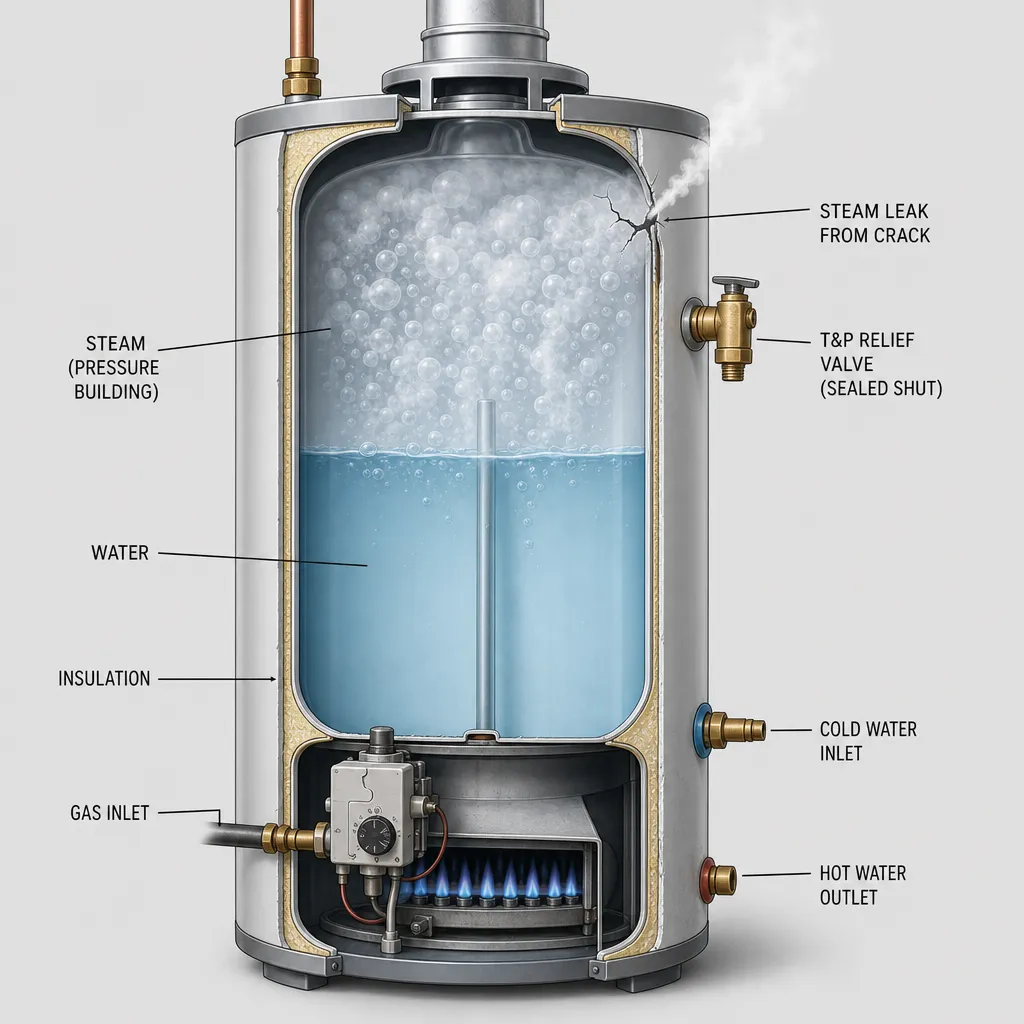
The most common path to a water heater explosion starts with pressure that the tank simply can’t contain anymore. When the water inside gets too hot or the pressure relief valve stops doing its job, the tank becomes a pressure cooker with no release. A failed thermostat is one of the most dangerous culprits — it can let the water climb past 212°F, and at that point you’re looking at conditions ripe for a catastrophic explosion 1. If the pressure relief valve doesn’t open as designed, that pressure keeps building until the tank fails violently 2.
There’s more working against an aging tank than just pressure. Over years of heating and cooling, minerals settle and corrode the steel, creating weak spots that can’t resist the force inside 3. A blocked or restricted vent makes things worse by trapping excess pressure that should be escaping. That’s exactly why both the International Plumbing Code (IPC) and the Uniform Plumbing Code (UPC) require every residential water heater to have a correctly rated T&P valve piped to a safe discharge location — it’s not a suggestion, it’s the law 4. A gas leak from damaged pipes or loose connections piles on another hazard, adding an explosion risk even when pressure isn’t the problem.
Signs your water heater is going to explode
A loud, rumbling noise coming from the tank is often the first thing you’ll notice, and it’s the sound of pressure fighting to escape. Water leaking from the tank or pipes is another red flag — it can mean the pressure relief valve is trying to do its job but something’s wrong. If you see a T&P valve dripping, it may be responding to thermal expansion in a closed plumbing system, which often means you need an expansion tank to absorb that pressure safely 5.
Don’t ignore banging or hammering sounds in your pipes, either. Experienced plumbers point out that appliances like washing machines and dishwashers can trigger water hammer — a sudden stop of fast-moving water that sends shock waves through your plumbing and stresses the water heater 6. And if you ever smell gas near the water heater, leave the house immediately and call a professional. That’s not a warning sign to investigate on your own.
Can water heater explode if turned off?
It’s unsettling but true: a water heater can still explode even when it’s turned off. If the pressure inside the tank is already dangerously high, cutting the power or gas doesn’t release that pressure. A gas water heater that’s turned off won’t explode from gas-related causes since the fuel source is cut, but residual pressure or corrosion-weakened steel can still fail. A damaged tank or a blocked T&P valve doesn’t care whether the burner is lit — it only cares about the stress it’s under.
Can an electric water heater explode?
Electric water heaters can explode, though experienced plumbers see it less often than with gas units. The risk usually traces back to a thermostat that fails and lets the water overheat, or a heating element malfunction that creates the same pressure buildup you’d get in a gas model. The safety devices are your last line of defense, and if they fail, an electric heater is still capable of a violent rupture 7.
How to prevent water heater explosion
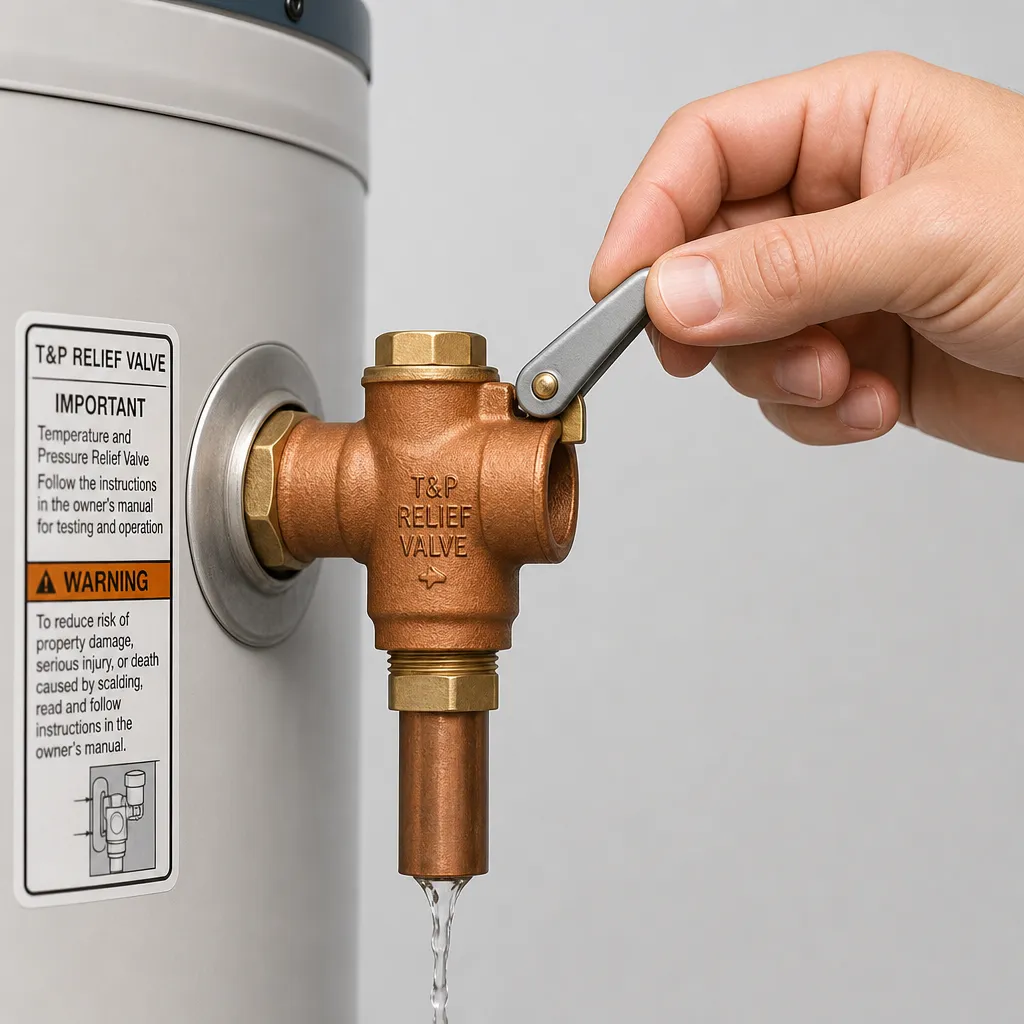
You’ve got more control here than it might feel like. Plumbing codes require multiple safety features — T&P valves, temperature controls, proper venting — but they only work if they’re maintained. Start by testing the T&P valve once a year: lift the lever briefly and let it snap back. You should hear a burst of water and then it should reseat cleanly 8. If it doesn’t, or if it keeps dripping afterward, call a licensed plumber.
Keep the area around the water heater clear of flammable materials and make sure the vent isn’t blocked by storage boxes or debris. If your home’s water pressure is above 80 psi, you’re over the code maximum and you’ll want a Pressure Reducing Valve (PRV) installed, set to 50–60 psi to protect your appliances 5. And here’s a detail most homeowners miss: the IPC explicitly forbids any check valve or shutoff valve between the relief valve and the heater or tank it serves — that path must stay unobstructed 9.
For an extra layer of protection, some experienced plumbers recommend a Watts 210 gas shutoff valve. It’s designed to cut the gas supply automatically if the temperature gets too high, and it’s especially useful when the T&P drain can’t be run to the exterior 6. Professional installation that meets code requirements is non-negotiable — this isn’t a DIY judgment call.
⚠️ Warning: If you smell gas or hear strange noises coming from the water heater, turn it off immediately and call a professional. Don’t wait to see if it stops.
Still getting rumbling after you’ve tested the T&P valve and cleared the vent? That’s often sediment buildup so thick it’s insulating the tank bottom and trapping heat. A full tank flush might solve it, but if the noise persists, the tank may already be compromised and a replacement is the safer call.