You turn on the tap expecting a rush and get a trickle. Low water pressure drags out showers, slows dishwashing and makes simple jobs take forever. It might be one faucet, the shower, or the whole house. Before you assume it's a big, expensive pipe problem, know that the cause is often something small hiding in plain sight.
This guide walks you through the common causes in order, from the five-minute checks to the ones that need a plumber. The first real step is a $15 pressure gauge, because it tells you whether the problem is at one fixture or on the supply side before you spend money on parts.
When to Call a Professional
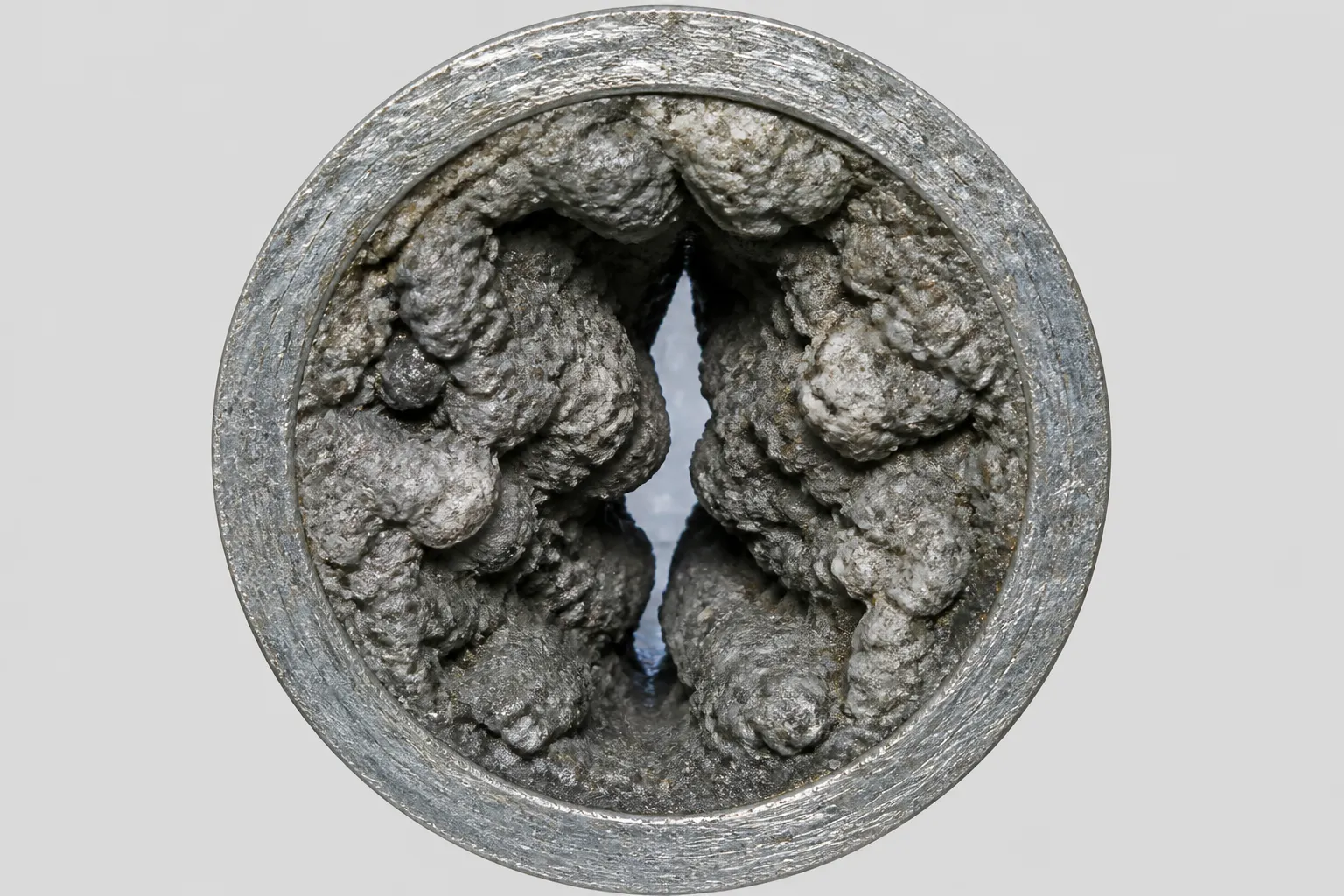
Most low-pressure fixes are safe to do yourself, but a few situations call for a licensed plumber before you pick up a wrench. If your gauge reads over 80 psi at an outdoor hose bib, you need a pressure-reducing valve installed or replaced. That's main-line work with code requirements attached 1. If you have galvanized steel supply pipe and the pressure is low all over the house, corrosion inside the pipe is the usual culprit, and replacing sections of it isn't a DIY job 2.
On a well, a pump that short-cycles or a waterlogged pressure tank usually means electrical work at the pressure switch or a new tank, which is a job for a well technician 3. And if you've worked through the steps below and every fixture is still weak, the restriction may be in the buried service line or at the meter. That takes specialized equipment and often a permit. A plumber can pin down the exact restriction with a gauge and a flow test.
Safety Considerations
- Know Your Main Shutoff: Find it now, before you need it. Test it yearly.
- Turn Water OFF: Always shut off water at the nearest valve or the main before taking apart fixtures or pipes.
- Release Pressure: Open a faucet downstream after shutting off the water.
- Avoid Force: Stuck parts often need penetrating oil, not brute force. Forcing can break pipes and fixtures.
- Beware Electricity: Keep tools and dry hands away from outlets and appliances near water.
- Hot Water Caution: Let hot water cool before working on it.
- Protect Eyes & Skin: Wear safety glasses. Vinegar and mineral debris can irritate.
Understanding the Problem in Detail
Think of your plumbing like a highway system. Water pressure is the speed limit pushing water through the roads — your pipes. Blockages like mineral buildup, kinks, or corrosion, closed lanes from shut valves, or a faulty speed governor (your PRV) slow everything down. Sudden pressure loss often points to a valve issue or major leak. Gradual decline is classic mineral buildup or pipe corrosion. Isolated issues mean a problem after the branch to that fixture.
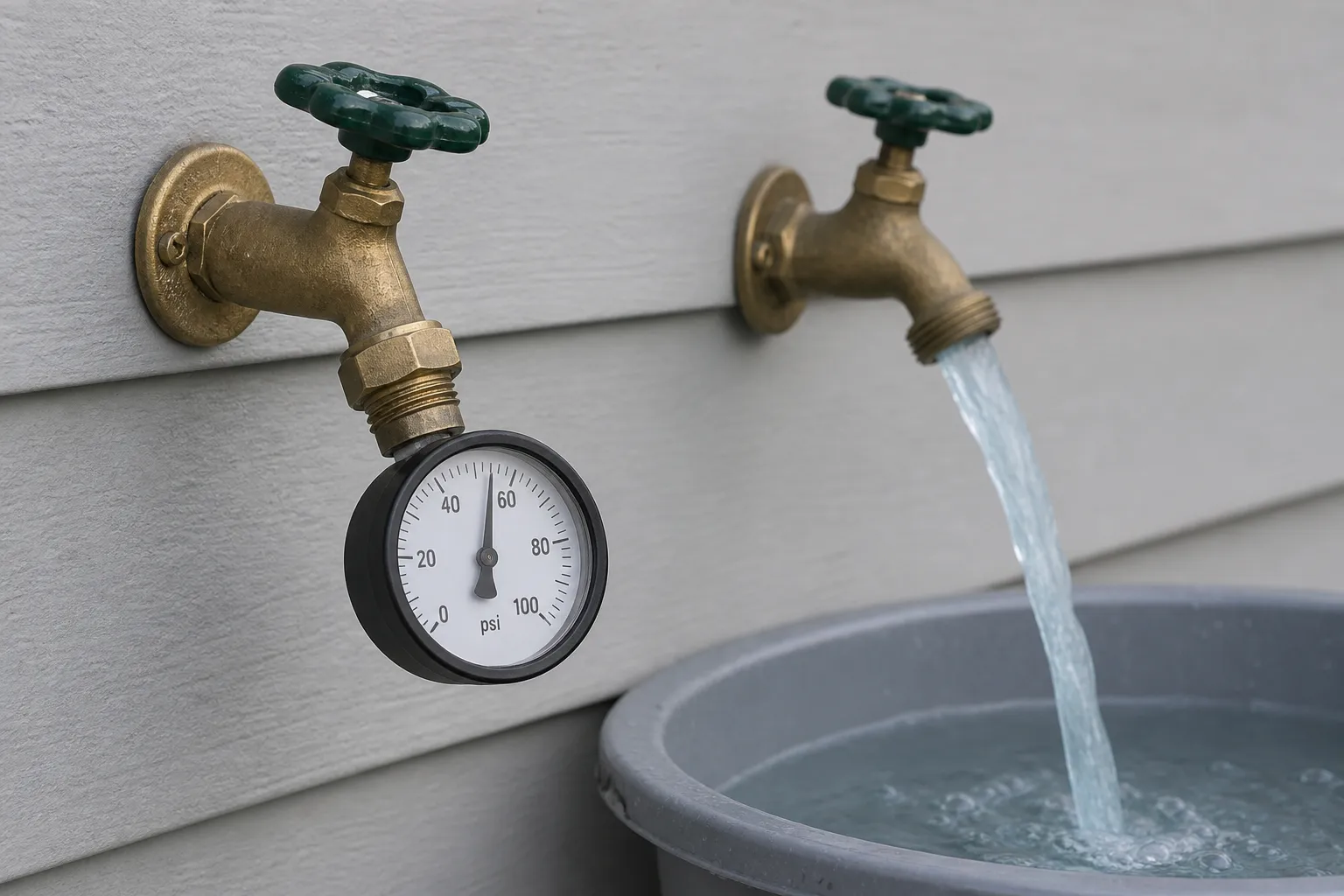
Before buying any parts, take two readings at a hose bib with an inexpensive gauge. First, a static reading with everything off. Then a flowing reading with a tub or shower running. A normal static reading (40-80 psi) that collapses under flow points to a restriction — a partly closed main or meter valve, a failing PRV, or undersized or corroded galvanized supply pipe. A low static reading points to the supply side: a PRV set low or failed, low utility pressure, or a well pressure switch or tank problem 3.
Where static pressure exceeds 80 psi, plumbing code requires an approved pressure regulator to bring it down to 80 psi or less 1. Under the UPC, regulators on drinking-water systems must meet ASSE 1003. Only units 1-1/2 inches and larger are exempt from needing a strainer ahead of them 4. A typical 3/4-inch or 1-inch household regulator should have one.
How to Fix Low Water Pressure, Step by Step
Step 1: Make sure every valve is fully open. Turn the main shutoff and the fixture's shutoff under the sink or behind the toilet counter-clockwise until they stop, since a valve bumped partly closed is a common cause. If the main valve is seized or won't budge, call a plumber rather than forcing it.
Step 2: Take a static and a flowing reading at a hose bib. Screw your pressure gauge onto the hose bib closest to the main, note the static reading, then open a tub or shower and read it again. Judge the flowing number with one tub or shower open, not every faucet in the house: some drop with everything running is normal, and experienced plumbers joke that the fix for that is to stop opening them all 5. If static pressure reads above 80 psi, call a plumber about the pressure-reducing valve.
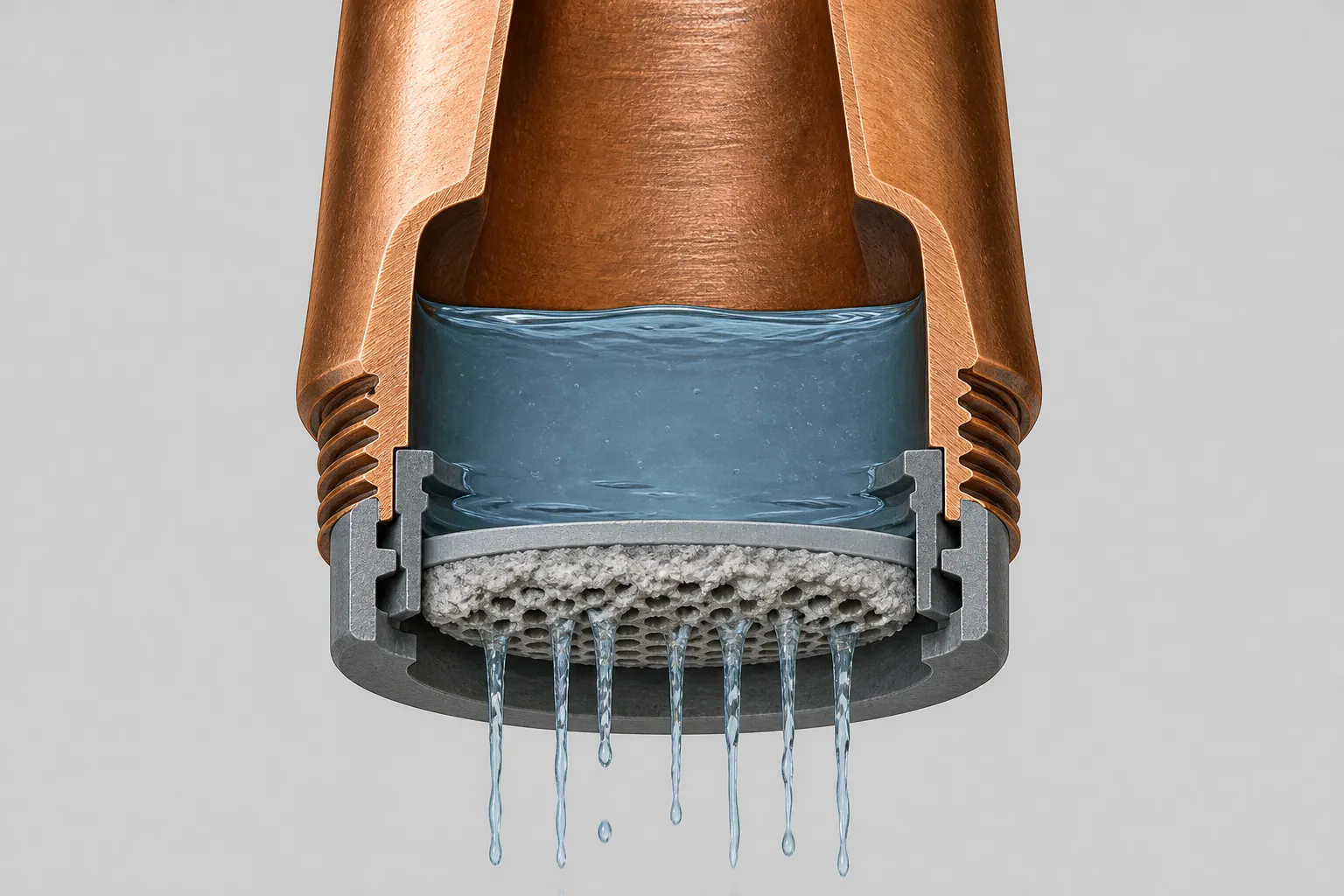
Step 3: Clean or replace aerators and showerheads. Unscrew the aerator or showerhead with your adjustable wrench (wrap it in a cloth to protect the finish), soak the parts in white vinegar for 30-60 minutes, scrub with an old toothbrush, and reinstall snug, not tight. If it's too corroded, replace it, taking the old one to the store to match the thread size and flow rate. If the aerator is seized or the threads are damaged, call a plumber to avoid breaking the fixture.
Step 4: Check supply lines and hoses for kinks. Look at the flexible lines under sinks, behind toilets and on the washing machine for kinks, crushing or bulges, and replace bad ones with braided stainless steel after shutting off the valve. If a shutoff valve leaks when you turn it, call a plumber to replace it.
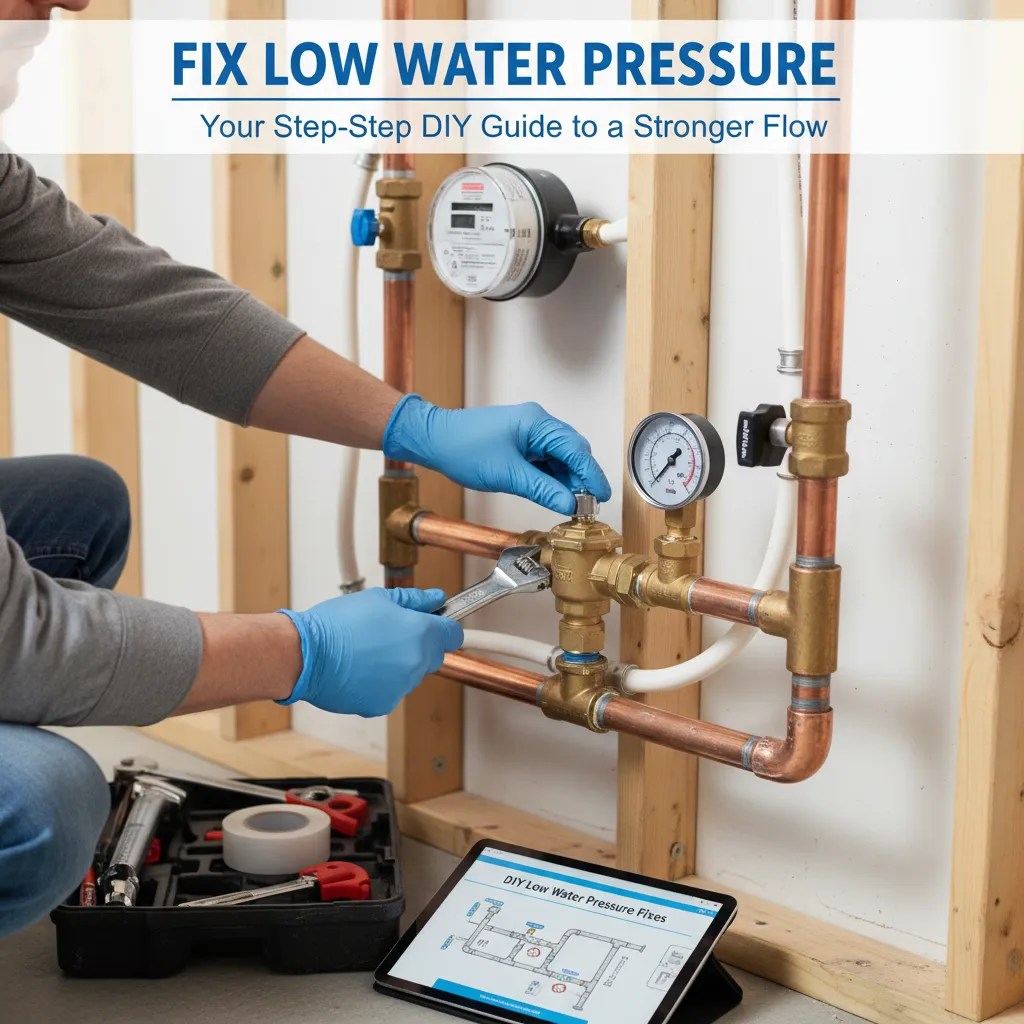
Step 5: Adjust the pressure-reducing valve if static pressure is low. Find the bell-shaped PRV near the main shutoff, turn its adjusting screw clockwise no more than a quarter turn, and recheck the gauge. If the pressure doesn't change, jumps around, or the PRV needs replacing, call a plumber. A wrong adjustment can push pressure high enough to damage pipes and appliances.
Step 6: Look for leaks and old galvanized pipe. Check for damp spots, mold or an unexplained jump in your water bill, and hold a magnet to exposed supply pipe: if it sticks hard, the pipe is galvanized steel, which corrodes shut from the inside. If you find a hidden leak or galvanized pipe that needs replacing, call a plumber. Cutting into supply pipe isn't a DIY job.
Tools & materials: adjustable wrench, screwdriver, bucket and towels, flashlight, pressure gauge ($10-$20), white vinegar, Teflon tape, replacement aerators (standard M15.5 x 1 thread / 15/16", usually 1.5-2.2 GPM), braided stainless supply hoses.
Troubleshooting Common Issues
Cleaned aerator but pressure still low? Check the fixture's internal cartridge or stem for debris. That may mean taking the faucet apart. Pressure good at some fixtures, bad at others? Focus on the low fixture's supply lines, valves and connections. Pressure drops when using multiple fixtures? A big drop could mean undersized pipes or a failing pressure-reducing valve (PRV) struggling to keep up. A residential PRV is a spring-loaded diaphragm valve that holds a set downstream pressure no matter how flow or inlet pressure changes, and turning the adjusting screw clockwise raises that setpoint 6. It takes the higher pressure from the public main down to a lower, steadier pressure for your household plumbing and fixtures 7.
Sudden, severe pressure loss everywhere? Check for a major leak by watching the meter and listening for hissing, or find out whether the city has been working on the main. The International Plumbing Code addresses inadequate pressure from the street main under Section 604.7 8.
'Hammering' noises? Install water hammer arrestors. The IPC requires an approved arrestor conforming to ASSE 1010 where quick-closing valves are used, installed per the manufacturer's instructions 8.
Pressure better near where the water comes in, worse farther away? That's a classic sign of corroded galvanized pipe choking the flow more and more along the run 3. One homeowner reported that replacing the corroded galvanized section of the main supply line in the basement brought their pressure back. The fix was the pipe, not the fixtures 9.
On a well? A waterlogged or undersized pressure tank shows up as rapid pump cycling and pressure swings rather than a steady low reading 10. The tank stores pressurized water so the pump doesn't have to start every time you open a tap, and if your well recovers slowly but steadily, a larger tank may help 10.
Pro Tips
- Unscrew aerators over a bowl or a plugged sink so small parts don't go down the drain.
- Take a photo of valve positions before you touch them.
- Check pressure at different times of day. Municipal pressure dips during morning and evening peaks, so a 2 p.m. reading may not match what your shower gets at 7 a.m.
- Clean aerators and showerheads with vinegar every six months, before buildup gets bad.
- Label your main shutoff valve so anyone in the house can find it in an emergency.
Maintenance and Prevention
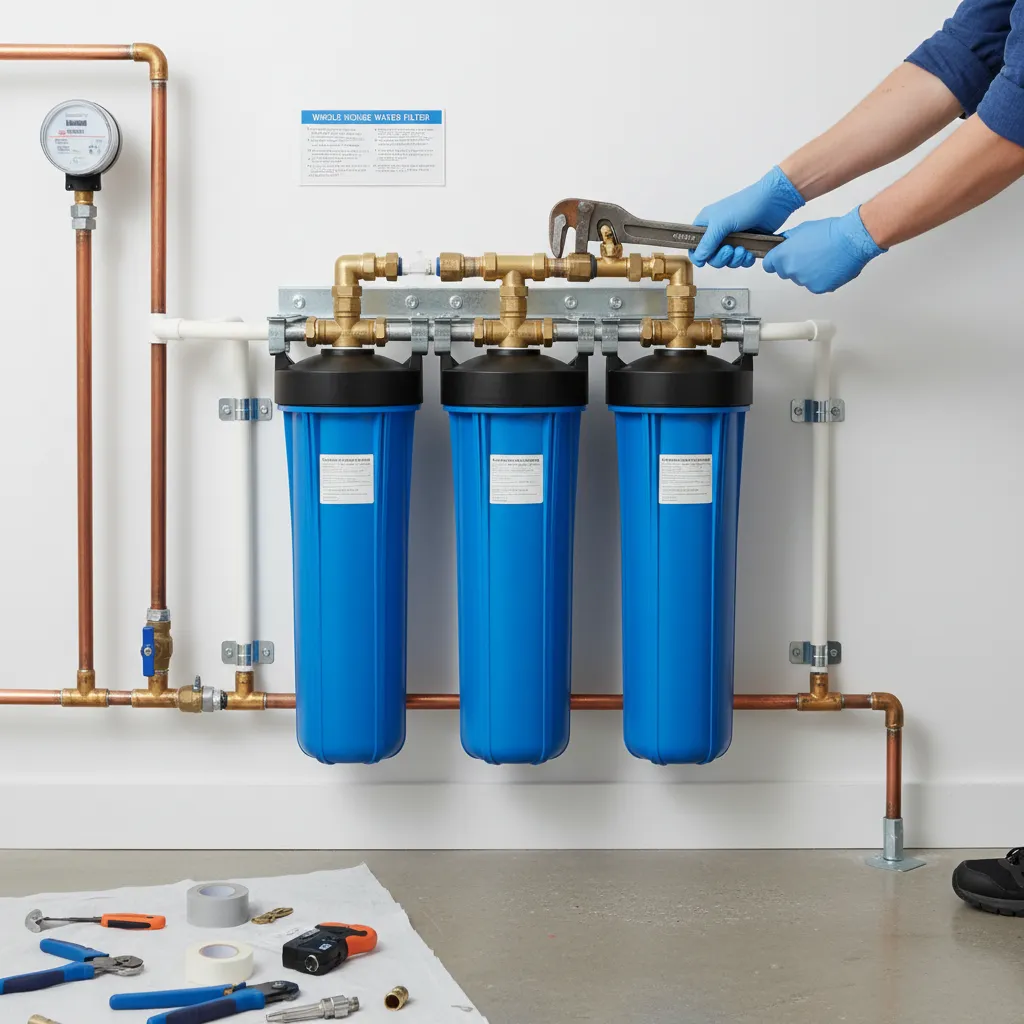
Regular Aerator/Showerhead Cleaning: Soak them in vinegar twice a year. Exercise Valves: Turn main and fixture shutoffs fully on and off once a year so they don't seize. Monitor Pressure: Check with a gauge each season to catch problems early. Replace Rubber Hoses: Swap washing machine and dishwasher hoses every 5-7 years, using braided stainless. Consider a Whole-House Filter: If you have hard water, it reduces scale buildup throughout the system.
Cost Analysis: DIY vs Professional
Before you authorize any parts replacement, spend $15 on a hose-bib pressure gauge. Replacing a water pressure regulator typically runs $300-$650 for most homes, including labor and materials 11. That's a big bill for a part you might not need, and the gauge test tells you whether the regulator is really failing or the problem is something cheaper, like a clogged aerator.
DIY Fixes: Aerators ($2-$10), Showerhead ($15-$50), Vinegar ($2), Teflon Tape ($1). Potential Pro Costs: PRV Replacement ($300-$650), Fixing Accessible Leaks ($150-$500), Re-piping a section (e.g., under a sink: $300-$800), Whole-house re-piping (Major project: $2,500-$15,000+). Saving Strategy: Tackling aerators, valves, and hose checks yourself avoids $100-$200+ service calls for simple fixes. Preventative maintenance drastically extends pipe life.
If your gauge reads above 80 psi, the regulator is likely failing and you'll need a plumber to replace it. If the pressure is normal at the hose bib but weak at one fixture, the problem is local, so clean the aerator or showerhead before spending anything on professional help.
Related Plumbing Problems
Leaky Faucets/Valves: Worn parts waste water and can subtly reduce pressure downstream. Water Hammer: Banging pipes indicate flow issues or need for arrestors. Running Toilets: Constant flow can lower pressure elsewhere. Discolored Water: Often signals pipe corrosion happening internally. No Hot Water: Could be a water heater issue restricting flow, not pressure per se. Sewer Smells: Unrelated to pressure, but indicates drainage problems.
Frequently Asked Questions
Why is the water pressure low in just one faucet or my shower?
This almost always points to a local issue. The likely culprit is a clogged aerator or showerhead, a partly closed shutoff valve under that sink, or a kinked supply line feeding just that fixture. Start with Steps 1, 3 and 4 on that one fixture.
I have good pressure at the kitchen sink but terrible pressure in the bathroom. What gives?
That suggests a problem in the branch of pipe feeding the bathroom. Check that the shutoff valves under the bathroom sink and behind the toilet are fully open, and look at the supply lines for kinks. If those are clear, the issue could be corrosion or a blockage in the pipes running to that bathroom, especially in an older home with galvanized steel pipe. That usually needs a plumber to diagnose.
Can low water pressure damage my appliances?
Low pressure by itself generally won't damage a dishwasher or washing machine, but the causes can. Mineral buildup that restricts flow can also clog appliance inlet valves. More importantly, a failing pressure-reducing valve can sometimes let high pressure spikes through, and those can damage appliances, pipes and fixtures. That's why adjusting a PRV calls for caution.
How much does it cost to get a plumber to fix low water pressure?
It depends on the cause. A service call to clean an aerator or open a valve might cost $100-$200. Replacing a PRV typically runs $300-$650. Fixing an accessible leak could be $150-$500, re-piping a section under a sink $300-$800, and whole-house re-piping $2,500 to $15,000 or more. The DIY steps in this guide can save you a call for the simple fixes.
Is it ever the city's fault?
Yes, sometimes. If your neighbors suddenly have low pressure too, it's likely a municipal issue such as a main break or work on the line, so contact your water provider. If only your house is affected, the problem is usually in your own plumbing past the meter.