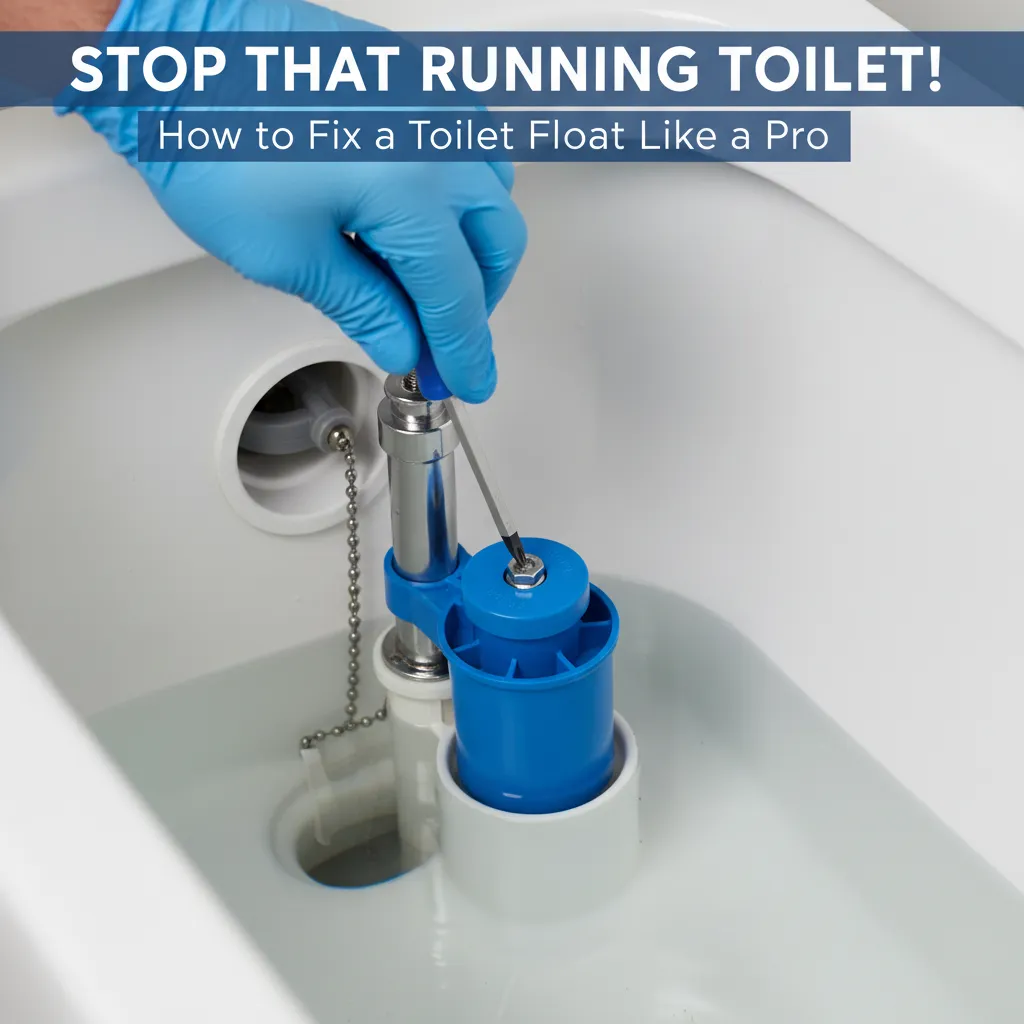
That maddening sound of water constantly running into your toilet tank isn't just annoying — it's money down the drain. Weak flush? Handle feels wrong? Water creeping toward the rim? Whatever's going on, the fix is probably simpler than you think.
Your toilet is a straightforward system: a few mechanical parts working together to fill, flush, and seal. When something goes wrong, it's almost always one of five things — the float, chain, flapper, water level, or a clog. This guide walks you through each one so you can pinpoint the problem and fix it fast, no plumber needed.
Solution (Beginner - 5-15 minutes emergency stop / 15-45 minutes adjustment / 30-60 minutes replacement)
Step 1: Shut Off the Water & Empty the Tank
Turn the supply valve behind the toilet clockwise until it stops. Flush and hold the handle to drain the tank. Sponge out the remaining water and lay towels around the base.
⚠️ Warning: Never skip shutting off the water. Confirm no water is flowing into the tank after flushing before you start working.
Step 2: Diagnose Which Part Is the Problem
Answer a few quick questions to pinpoint the right fix:
Step 3: Fix a Sticking or Misadjusted Float
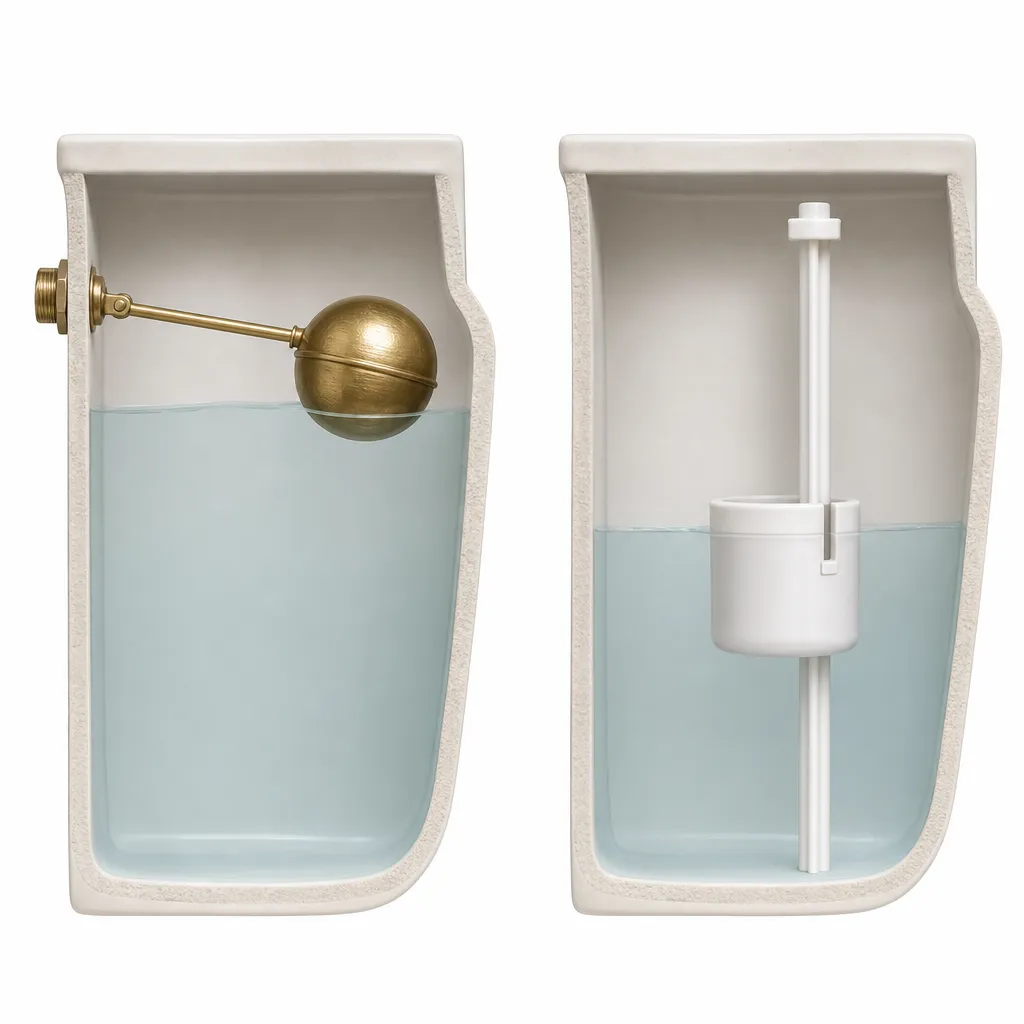
Look inside the tank. Plastic ball on an arm (ball float) or a cylinder sliding on a vertical tube (cup float)? Move it gently — does it stick? Is it cracked or waterlogged?
Ball float sticking? Bend the brass arm slightly downward or clean the pivot with vinegar. Cup float sticking? Pinch the clip, slide it free, and clean the shaft with vinegar. To adjust: ball float — turn the screw clockwise to lower water, counterclockwise to raise. Cup float — squeeze the clip and slide the cup down to lower the water, up to raise it. After flushing, the water in your tank should sit 1/2" to 1" below the top of the overflow tube.
⚠️ Warning: Turn adjustment screws gently. Over-tightening can strip plastic threads. Don't force anything that feels stuck.
Step 4: Adjust or Replace the Toilet Chain
Pop the tank lid off and check the chain:
- Is it hooked properly? If the S-hook has slipped off the lever arm, reattach it. Add a small split key ring to the lever arm for a more secure anchor.
- Is it rusty or corroded? Brass chains degrade fast in water — stainless steel is the right choice. Swap a rusty chain by unhooking both ends, threading the new one through the flapper's attachment tab, and hooking it to the lever arm.
- Is the slack right? Aim for about 1/2 inch of loose chain when the flapper is closed. Too tight and the flapper can't seal (causing running). Too loose and the flapper won't lift fully (causing weak flushes). Adjust by moving the clip on the lever arm or removing links — pinch the chain sideways to pop a link open.
⚠️ Warning: Wear gloves if handling corroded metal — edges can be sharp. Avoid yanking plastic parts.
Step 5: Replace a Worn Flapper
The flapper is the rubber seal at the tank's bottom. Chlorine and minerals harden it over time, breaking the seal. Test with food coloring: add drops to the tank — color in the bowl within 15 minutes means it's leaking.
To replace:
- Unhook the chain from the flush lever.
- Slide the flapper's ears off the overflow tube pegs. Snap a photo first for reference.
- Wipe the valve seat with a vinegar-dampened rag. No abrasive scrubbers — micro-scratches cause leaks.
- Attach the new flapper centered over the valve. A dab of plumber's grease on the mounting points helps.
- Reattach the chain with about 1/2" slack.
Universal flappers (like Fluidmaster 502) fit most toilets, but match your flush valve size — 2" or 3". Bring your old flapper to the hardware store if you're unsure.
⚠️ Warning: Don't stretch or twist the flapper during installation — it should hang naturally over the valve opening.
Step 6: Fix the Water Level
If it's off:
- Too high — water spills into the overflow tube, causing constant running. Lower the float (see Step 3).
- Too low — not enough water for a strong flush. Raise the float.
- Inconsistent level — mineral buildup on the valve seal is the usual culprit. Try cycling the water off and on quickly a few times to flush debris out, or clean with vinegar.
Also check the refill tube (the small hose from fill valve to overflow tube). It should clip to the tube's rim, not sit inside it. If detached, the bowl won't refill properly.
⚠️ Warning: Watch for leaks at the supply line connection when turning water back on. Tighten slightly if it drips.
Step 7: Stop an Overflow Emergency
Water rising to the rim? Act fast:
- Kill the water supply. Turn the shutoff valve clockwise. Can't find it? Lift the lid and pull the float arm up.
- Contain the mess. Towels around the base. Scoop bowl water with a bucket if critical.
- Plunge. Flange plunger over the drain hole. Push down firmly, pull up sharply — keep the seal. Repeat 15-20 times. Gentle pressure waves beat violent thrusts.
- Auger if plunging fails. Insert a toilet auger and crank clockwise. Feel resistance? Gently push and pull to hook the debris. Retract fully before removing to avoid splashback.
⚠️ Warning: Wear rubber gloves — toilet water contains bacteria. Never pour boiling water into the bowl; it can crack the porcelain. Never use chemical drain cleaners — they rarely work on toilet clogs and can damage internal seals.
Step 8: Test Your Fix & Tweak
Turn the water supply back on counterclockwise. Watch the tank fill — water should stop just below the overflow tube. Flush 2-3 times. Tank fills and shuts off completely? No leaks at the fill valve or supply line? Run the food coloring test once more to confirm the flapper is sealing.
⚠️ Warning: Have towels ready when turning water back on. Watch diligently for any drips at connections.
Pro Tips
- Clean mineral buildup first. Soak crusty parts in vinegar overnight before adjusting or replacing — it often fixes sticking issues without buying new parts.
- Replace the flapper and fill valve together. They wear out around the same time. Doing both at once saves you from reopening the tank a month later.
- Listen for hissing. After the tank fills and shuts off, put your ear near the fill valve. A slight hiss often means debris is stuck in the valve seal. Try cycling the water off and on quickly a few times to flush it out.
- Take a phone pic first. Snap a picture of your tank's setup before disassembly — it's a lifesaver when reconnecting hoses and positioning parts.
- Use a paperclip in a pinch. If the chain breaks and you don't have a replacement, a bent paperclip works as a temporary emergency chain.
- Keep a dedicated toilet plunger. Sink plungers don't seal properly on toilets. A flange-style plunger is worth the few extra dollars.
- Buy a repair kit for $20. A kit with chain, flapper, and fill valve future-proofs your repairs in one trip.
When to Call a Professional
Call a plumber if: water leaks from under the tank, the shutoff valve won't turn, multiple drains back up, clogs recur weekly, or you're uncomfortable with any step. Average pro cost: $150-350.
Toilet Chain Too Long, Too Short or Keeps Coming Off
The chain is the only link between the handle and the flapper, so a link or two either way decides whether the toilet flushes properly. Too tight, and it holds the flapper slightly open. The tank trickles into the bowl and the fill valve keeps topping it up. Too loose, and the flapper lifts only part way, so you get a weak flush, or the slack folds under the flapper and stops it sealing.
Setting the slack. With the flapper closed, you want about 1/2 inch of loose chain. Lift the flapper with a finger: if the chain goes taut straight away, it's too short. Then push the handle and watch. The chain should pull the flapper straight up, not sideways, and the flapper should drop back cleanly. If it pulls at an angle, move the clip to the hole in the lever arm that sits directly above the flapper.
To shorten the chain, move the clip a link or two. You can also pinch a link sideways with needle-nose pliers to pop it open and remove the excess. Leave a short tail so you have something to grip next time, but not so long that it drifts under the flapper.
Chain keeps coming off? It's usually one of three things:
- Too much slack lets the chain swing and unhook. Shorten it.
- The S-hook or clip has bent open. Squeeze it closed with pliers or replace it.
- The hole in the lever arm has worn. Thread a small split key ring through it and hook the chain to the ring.
Chain broke or rusted? Replace it with a stainless steel chain, 6-8 inches long, for $3-8. Brass and plated chains corrode in tank water. Hook it to the lever arm first, then the flapper's tab, then set the slack. Many flapper kits come with a chain, so if your flapper is more than a few years old, swap both at once.
In a pinch, a bent paperclip or a length of dental floss will get you through the night. String swells and stretches when wet, so don't leave any of these in for long.
If the handle feels stiff, a dab of silicone grease on the lever pivot helps. If the handle is loose but the chain looks fine, tighten the mounting nut inside the tank behind the handle. On most toilets it's reverse-threaded, so turn it counterclockwise to tighten.
How to Replace a Toilet Flapper
The flapper is the rubber seal at the bottom of the tank. Chlorine and minerals in the water harden and warp it over time. Once it stops sealing, water seeps into the bowl until the fill valve switches on to top up the tank. That's the "phantom flush": the toilet refills by itself every so often with nobody touching it. A leak like that can waste 200+ gallons a day.
Is the flapper really the problem? Put 5-10 drops of food coloring in the tank and wait 15 minutes without flushing. Color in the bowl means the flapper, or the seat it sits on, is leaking. A tank level that drops overnight points to the same leak. Also look for cracks, warping or a soft, swollen edge.
Buy the right size. Flush valves come in 2-inch and 3-inch sizes, and the flapper is wider than the valve: a flapper about 3 inches across fits a 2-inch valve 3. Universal flappers such as the Fluidmaster 502 fit most 2-inch valves. Check how yours mounts as well. Most hook onto two pegs on the overflow tube with "ears", while some slide over the tube on a ring. If in doubt, take the old one to the store.
The swap takes about 15 minutes:
- Shut off the supply valve, then flush and hold the handle down to empty the tank.
- Unhook the chain and slide the old flapper off its pegs or up off the tube. Snap a photo first.
- Wipe the valve seat (the rim the flapper lands on) with a vinegar-damp rag. Skip scouring pads, because scratches let water past.
- Fit the new flapper the same way, centered over the opening and hanging naturally, not twisted.
- Reattach the chain with about 1/2 inch of slack, turn the water back on and repeat the dye test.
Still running after a new flapper? Check the chain slack first, since that's the usual culprit. After that, look for grit on the seat, a flapper sitting off-center, or a fill valve set so high that water spills into the overflow tube. If the valve seat itself is pitted or cracked, call a plumber. Replacing the flush valve means taking the tank off the bowl.
Flappers last about 3-5 years. In-tank bleach tablets shorten that a lot, so skip them. If the fill valve is as old as the flapper, replace both while the tank is empty.
How to Adjust the Water Level in a Toilet Tank
The water should stop 1/2 inch to 1 inch below the top of the overflow tube, or at the fill line if your tank has one molded inside. Too high, and water spills down the overflow tube nonstop, so the toilet runs. Too low, and the flush won't clear the bowl.
The float sets the level. As the water rises it lifts the float, and the float shuts the fill valve, a bit like a thermostat. Find which type you have:
- Ball float (a ball on a long arm): turn the adjustment screw on top of the valve clockwise to lower the level, counterclockwise to raise it. On an old brass arm with no screw, bend the arm gently down to lower the level.
- Cup float (a cylinder that rides up and down the fill valve shaft): pinch the clip on the adjustment rod and slide the cup down to lower the level, up to raise it.
- Floatless valve (a short valve with no float you can see): turn the adjustment dial as marked on the valve.
Make small changes. A quarter inch of float travel moves the water level noticeably. Flush, let the tank refill, check the level and adjust again.
Check the refill tube. That's the small hose from the fill valve to the overflow tube, and it refills the bowl after each flush. Clip it to the rim of the overflow tube, above the water. Pushed down inside the tube, it can siphon water out of the tank and keep the valve cycling. If it's come off, the bowl won't refill properly.
Toilet only stops when you lift the float? That means the valve works, and the level is just set too high or the float is catching on something. Adjust it down and make sure the float moves freely. If it keeps running even with the float lifted, grit or scale is stopping the valve from sealing. Turn the water off and on a few times to flush grit out, or clean the seal with vinegar.
Replacing a float cup or the fill valve. If the float is cracked or waterlogged, or the valve is more than about 10 years old, replace the fill valve. A universal Fluidmaster 400A costs $15-20. With the tank empty, disconnect the supply line under the tank, keeping a bucket under it. Unscrew the plastic locknut and lift the old valve out. Set the new valve's height so its critical-level mark sits at least 1 inch above the overflow tube. Tighten the locknut by hand, then snug it with pliers (it's plastic, so no more than that). Reconnect the supply, turn the water on and set the level.
How to Fix an Overflowing Toilet
People call two different problems "overflowing", and the fix depends on which one you have.
The bowl is rising toward the rim. That's a clog, so don't flush again.
- Lift the tank lid and push the flapper down to close it. Then turn the supply valve behind the toilet clockwise to shut it.
- Put towels around the base. If the bowl is near the rim, bail some water into a bucket.
- Use a flange plunger (the kind with a sleeve that fits into the drain). Make sure water covers the cup, push down gently to push the air out, then plunge firmly 15-20 times without breaking the seal.
- If that fails, feed a toilet auger in and crank it clockwise, working it back and forth. Retract it fully before you lift it out.
Wear rubber gloves. Skip chemical drain cleaners, which rarely clear toilet clogs and leave you plunging caustic water. Never pour boiling water into the bowl, because it can crack the porcelain.
Call a plumber if water comes up in a tub or floor drain when you flush, or several fixtures drain slowly at once. That points to a blockage in the main sewer line, and plunging won't reach it. Clogs that come back every week or two point the same way.
The tank is filling into the overflow tube. If water reaches the top of the overflow tube and keeps draining down it, the fill valve isn't shutting off. That water goes into the bowl, so it won't flood the floor, but the toilet runs all day. Lower the float (see the water level section above). If the valve still won't shut off at a lower setting, its seal is worn, so replace the fill valve.
Water on the floor around the toilet usually isn't an overflow at all. Check the supply line connection and the tank bolts, then the wax ring at the base. In humid weather, a sweating tank can leave puddles too.
Troubleshooting by Symptom
If your toilet runs for just a few seconds every several minutes—say, 3 seconds every 12 minutes—you've got a leaky flapper letting water trickle into the bowl and triggering periodic refills 1. A constantly running toilet can waste thousands of gallons per month; one homeowner saw 13,000 gallons used in a single week from a running toilet 2.
To confirm a leak, turn off the water supply and mark the water level in the tank. If it drops after an hour, the flapper is leaking 1. When you replace the flapper, measure the width of the existing one—a flapper that measures 3 inches across fits a 2-inch flush valve and takes a Fluidmaster 502 3.
If adjusting the float and replacing the flapper doesn't stop the running, the fill valve may be worn out. Experienced plumbers recommend replacing it with a Fluidmaster Pro45 (model 45) 2. Also check for a misaligned float arm 1.
If water is overflowing from the toilet's standpipe, adjust the float to shut off at a lower water level 4.
| Symptom | Most likely cause | Try first |
|---|---|---|
| Water still running after adjustment | Worn flapper or chain too tight | Food coloring test. If flapper leaks → Step 5. If not → check chain slack (Step 4) |
| Float sticks after cleaning | Mineral buildup warped the float or arm | Replace the float or entire fill valve assembly |
| Water level inconsistent | Debris in the fill valve seal | Cycle water off/on quickly 5-6 times to flush debris. Clean valve seal with vinegar |
| Weak flush after repair | Chain too tight or water level too low | Loosen chain slack (Step 4) and confirm water sits 1/2" below overflow tube (Step 6) |
| Plunging isn't working | Poor seal or too much air in the cup | Add water to cover the plunger cup. If still stuck, switch to the auger |
| Gurgling sounds when flushing | Blocked vent stack | Run a nearby sink while plunging to relieve pressure. If it persists, call a plumber |
| Hissing after tank fills | Debris in fill valve seal | Cycle water off/on quickly 5-6 times. If hissing continues, replace the fill valve |
| Handle feels loose | Loose mounting nut | Tighten the nut behind the handle cover inside the tank |
Maintenance and Prevention
- Test monthly. Add food coloring to the tank — color in the bowl within 15 minutes means the flapper is leaking.
- Clean the tank every 6-12 months. Turn off water, flush, add 2 cups vinegar, let sit an hour, then scrub.
- Check chain slack annually. Verify 1/2" slack. Replace every 1-2 years even if it looks okay — water degrades them.
- Replace the flapper every 3-5 years. They deteriorate even without visible damage.
- Skip bleach tablets. They destroy rubber parts. Stick to vinegar cleaning.
- Never flush wipes (even "flushable" ones) — they're the #1 cause of recurring clogs.
- Consider a high-efficiency toilet. If your toilet is old or you're remodeling, upgrading to a WaterSense certified model can save water and money. These toilets use no more than 1.28 gallons per flush, which is 20% less than the standard 1.6 gpf models 5. In California, new residential construction already requires toilets with a flush volume of 1.28 gpf or less under the CALGreen code 6.
Frequently Asked Questions
My toilet runs intermittently — a few seconds every few minutes?
Flapper barely sealing or float set a hair too high. Water leaks or spills into the overflow tube until the fill valve kicks in. Start with the food coloring test — if the flapper leaks, replace it. If not, lower the float slightly.
How much slack should the toilet chain have?
About 1/2" of loose chain when the flapper is closed. Lift the chain straight up — it should lift the flapper without resistance for the first half-inch. Too tight = can't seal (runs). Too loose = won't lift fully (weak flush).
I replaced the flapper but the toilet still runs. What else could it be?
90% of the time it's chain tension — check for 1/2" slack. If that's fine: 1) Clean debris off the valve seat with vinegar, 2) Check for a warped seat (may need a pro), 3) The fill valve may be set too high, 4) The new flapper may not be centered.
Is a running toilet an emergency?
Not a flood emergency, but a water-wasting one. A running toilet can waste 200+ gallons daily. Fix it as soon as you can. Shut off the supply valve if you can't fix it immediately.
Can a smart device help me catch a toilet leak?
A water monitoring device like Flume can detect toilet leaks by tracking real-time water usage and sending leak alerts. One homeowner reported using Flume to monitor water usage and receive leak alerts, finding it easy to install 7.